Artist Date 72: I Hadn’t Even Realized They’d Been Gone

On Wednesday, Linda emailed me to cancel our date to the Art Institute.  Understandably, as she recently fell and cracked a few ribs.  She is on the mend, but not quite well enough to go out.

And just like that, the universe provided me with my Artist Date – Number 72.

I’ve been struggling with them lately.  Planning.  Going.  Writing.

I thought about messaging R. to see if he wanted to meet me.  We’ve been messaging one another on OKCupid, but haven’t met yet.  We will next week, over coffee.

Yes, I just not-so-subtly slipped that in…that about two weeks ago I somewhat hesitantly joined the world of online dating.  Although I haven’t had a date yet.

Yes, my entire blog centers on life after divorce.  The heart-breaking dalliances, and the more than year-long commitment to dating myself, courting my own creativity.  But I neglected to write about this.  Amazing.

Yes, blog forthcoming.

And yet, something knew better.  A higher self?  Just the universe at work?  For several weeks now, despite my feelings and my best efforts, time and space for my solo sojourns has serendipitously appeared.  And my feet have followed.  Habitual.  Almost like brushing my teeth.  But coupled with a craving –for time.  With me.  Outside of me.

And so I nix the message to R.  Grab a banana and a latte at Starbucks – the divorcee’s dinner – and head to the Art Institute for the lecture, “Return of the Modern Masters.”  I hadn’t even realized they’d been gone.

Crossing the street I see A. reading a newspaper, waiting in line to enter the museum for free after 5 p.m.  I invite him to jump the line with me – pulling out my member card.

We are early for lecture.  We wander into the Nilima Sheikh’s exhibit “Each Night Put Kashmir in Your Dreams.”  I saw it the day Mr. 700 Miles slipped out of my life without a word.  When the heart space between us –which up until then had been just inches –became a chasm I couldn’t seem to reach across, no matter how I tried.  Artist Date 68.

I tell this to A. while we view, Farewell,” a red scroll with two bodies entwined.  A man peeling open his chest, exposing his heart.  It reads “If only somehow you could have been mine.  What would not have been possible in the world?”

I tear up.

“I’ve done that too,” he says quietly.  Somehow, this makes me feel better.

He tells me he couldn’t face hurting her.  That he told himself he was sparing her.  Sober now, he understands he was only sparing himself.

I tell him that 700 Miles is active in his addiction to drugs and alcohol.  He nods.  “That’s what we do.”  This is not the first time I’ve heard this in regards to him and our story.  I nod, but I still do not understand it.

I show A. Marc Chagall’s “America Windows” outside of Rubeloff Gallery, where the lecture is.  He hasn’t seen it before.  I tell him that Ferris kissed Sloan here.  I am not sure he is old enough to remember the movie.  I feel like a docent, showing A. my Art Institute.

The lecture moves quickly – giving context to the positioning of the paintings and sculptures that have been returned to their rightful homes.

I am tempted to take notes.  I have before, knowing I was going to blog.  Sitting with A. I feel somehow self-conscious.  As if he might ask why.

I think about my friend Nithin commenting on kids and not-kids filming concerts on their phones.  Experiencing the music through a screen rather than directly.  Disconnected.  Too busy “showing” everyone where they are – via Facebook, Twitter and the like – rather than “being” where they are.

I imagine my note taking might fall into the same category.  I allow myself to just listen.  I free myself from the need to remember.

A. and I part ways after the lecture.  He is meeting a friend for a concert at the Chicago Theatre. (I wonder if he will watch it through his phone.)

I climb the open-backed stairs – the kind that make my ex-husband nauseated and panicky – to the third floor galleries, to see the “Returned Masters.”

The galleries are crowded.  I wander.  Thinking about the lecture.  About artist life in Europe before and during WW II.  But ultimately seeing the work through my own lens.

I drink in the juicy, ripeness of Max Beckman’s “Reclining Nude.” And I wonder why I am so set on waif-y thinness for myself.

I smile at Chagall’s “White Jesus,” recalling it is a favorite of the current Pope.  I notice my tendency to breathe deeply when facing his work.  As if I might inhale something of him.

I recall “Human Figure with Two Birds” from the Max Ernst show at the Metropolitan Museum of Art.  I greet it and Loplop – the bird which comes to represent Ernst, “the private phantom attached to my person” – like an old friend.

I giggle at the “Exquisite Corpse,” a game played on paper by Man Ray, Andre’ Breton and Yves Tanguy while they waited for WW II to end – each adding to an unseen figure, folded back accordion-style, out of sight.

I long to feel the smoothness of Alberto Giacometti’s “Spoon Woman” and Constantin Brancusi’s “White Negress II.”

The “returned Masters” have helped return me to my own.  Out of my head and my heart.  Into my feeling body.  Like the Masters, I hadn’t even realized it had been gone.

Artist Date 56: Kind Of Like I Know You

2013-06-04 17.12.55
I coulda, shoulda
worn this hat this night.

It’s raining. Pissing raining. And dark. The snow from the storm which renamed this place Chi-beria is melting and I’m certain the city will flood.

And what look like parking spots in Rogers Park are a siren’s calling mix of ice, snow and deep water. My wheels are sliding under me. And then my feet, unsteady in the rain boots I never wear. The ones I bought a few years ago. That I thought could pass for winter boots as the shaft is made of grey flannel. I was mistaken.

I walk gingerly into the tiny theatre and choose my seat from the 25 or so, covered in red velvet. I lay my gloves, scarf and hat on the chair next to me to dry.

I smell like wet dog.

Eric Warner sent me an invitation to his performance –“A Life in Tending,” Artist Date 56 – on Facebook, just after his last performance, where he shared the stage with my friend Clover. Artist Date 45.  The same night I realized I have danced with his fiancé years.

So I kind of feel like I know him, even though I don’t really. But he greets me at the door like I do. Even though Clover isn’t here. And neither is his fiancé.

He takes me into The Purple Hotel on Lincoln Avenue with him and his friends – long after it has closed. When the ground is grown over with weeds and the swimming pool is filled with black algae. When they snuck in, several years ago. Or more to the point, when they committed a felony in the name of urban excavation. Of bearing witness.

Which takes him into his grandmother’s home.

And he takes me there too, introducing me to the fierce, loving, tough-as-nails matriarch whose only rule was “Do whatever you want but don’t burn the house down.” Who, when informed her grandson’s classmates call him “fat” and “stupid,” asks, “Do you think you are those things?” Adding that people will tell him he is all sorts of things, what matters is that he knows who he is.

It is no longer that place since his grandmother died several years ago – even though his grandfather remains. He has taken to sitting in her chair, instead of staring at the empty space, where she used to be, from his own.

Pimp or Orthodox Jew?
Pimp or
Orthodox Jew?

Her walker, commode and oxygen tank sit, as though waiting for her to return. Tsotchkes line the kitchen table, sold for a song to feed his Keno habit. And perhaps also as a way of emptying the house, so his family won’t have to when he dies.

I think of my birthmother’s home, a place I visited just three times. Once to meet her. Once to say goodbye. And once to bury her.

On the first visit, I noticed the oxygen tanks in the kitchen – she was just 56. When I returned a few years later, a walker, shower bench and commode had been added.

On the third visit, we got rid of all of it. Me, my “aunt, uncles and cousins,” all of whom I’d never met until now. Except for my aunt. And her, just once, on my second visit.

I tossed reams of paper into large, black garbage bags – notes on an unsolved murder mystery she was following, years old credit-card statements, meeting minutes from the local chapter of the Daughters of the American Revolution.

I remember standing back as my cousins fingered through her jewelry. My uncle telling me to “get in there.” I didn’t want anything, but I took a brooch anyway.

A few weeks later my aunt sent me my birth mom’s fur hat and coat –her name embroidered on the inside lining. It had belonged to their mother, my “grandmother.” I have never worn fur in my life. I cannot decide if I look like a pimp or an Orthodox Jew in it. It hangs in my coat closet still, even on the chilliest of Chicago days.

This morning, my birth mom’s son, my “half brother” friended me on Facebook. We have never met, or even spoken. A few months ago his daughter wrote to me. We exchanged a couple of emails where I filled in the blanks, explaining exactly who I was.

The timing is not lost on me.

I want to tell Eric all of this. To share my story, because he has shared his.  Because I feel like I know him.  To say “me too.” But I don’t. I do not see him on the way out and I am anxious to get home.

When I arrive I look at the calendar hanging in the kitchen – a gift from my “real” mom, the one who raised me. I’ve written just two things for January. The anniversary of my spiritual teacher’s passing, and my birth mom’s birthday. They are the same day, January 12 – this Sunday.

Further From The Flame Than I Knew

I sometimes have a one-plate rule.  Actually, it’s not even a rule, it’s just how I eat.  Except for when I don’t.  Today is one of those days.

The table at Martha's, post meal.  The pies have been put away, but my copy of "Love, Sex and Astrology" has not.
The table at Martha’s, post meal. The pies have been put away, but my copy of “Love, Sex and Astrology” has not.

It is Christmas and I am at Martha’s house with her son Louie, his girlfriend Katie, Jack and Jonnie.  There is enough food in the kitchen for triple the size of our party.  I have reloaded my plate, even though I have not finished what is on it, adding a second piece of ham and a small spoonful of macaroni and cheese, which I did not try the first time around.  I pile it on top of my salad – greens with roasted root vegetables, gorgonzola cheese, walnuts and pear.

The macaroni is delicious.  Made with sour cream, cream cheese, and cheddar and parmesan cheeses.  I say it is perhaps too rich, and laugh, thinking about those people who say that foods are too rich or too sweet.  No such thing.

Except for when they are.  This is one of those times.

I put my fork down.  My brain wants more but my belly says no.  Or perhaps it is not my belly but some higher-self that is constructed of painful memories.  The higher self that says don’t put your hand on the hot stove.

Trouble is, I’m the type that likes to bring my hand really close to the burner, to see how close I can get, to feel the heat without getting burned.

It is this second plate.  It is the boy I spent the night with several months ago. And, knowing he could not possibly give me what I want, and that once I am physically involved my perception gets blurry, spent a second night with him anyway.

It is my years of vain efforts to try to drink like other people.

The higher self speaks to me.  Passover.  1990-something.  I still live in Detroit and my parents are still married, but they do not live in my childhood home.  Neither do I, which means I am somewhere between 21 and 24 years old.

I am thin for the first time in my life.  Really thin.  I am rigid about my eating and exercise.  The kind of rigid that makes me not all that much fun to eat with.  I feel like I have cracked the code.  That I will never be heavy again.  That I am fixed.  I am mistaken.

My mother has made some sort of gelatinous kosher-for-Passover dessert.  It is an experiment, as is every kosher-for-Passover dessert, where chemistry and good taste are at odds in the never-ending quest to make tasty sweets without flour.

I have one.  Then another.  And another.  They are not even good but I cannot seem to stop myself.  My mother clears the table and brings them into the kitchen and I follow, secretively, wolfing down a few more.  As if anyone is paying attention.

Next I know I am in the upstairs bathroom, on the floor, trying to make myself throw up. But I cannot.  My mother asks if I need to go to the hospital.  I say no because I cannot imagine what they will do to help me.  I lie on the cool tile with my pants unzipped and wait for this feeling to pass.

I tell Martha and Jonnie this story, and that eating too much feels scary.  Which is not to say that I don’t overeat, because I do.  And today is likely to be one of those days.  But I do not eat to sickness and have not in many, many years.  The desire has been taken from me.  It is a miracle.

As is my reaching out to that dear, sweet boy only one more time.  And when the response was tepid, not returning to him, trying to convince him, or myself, that it, that we, could be otherwise.

As is my not trying to drink like other people for more than six years.  Instead, putting down the drink entirely.

I finish my plate.  Slowly.  A bit later I have a sliver of pumpkin cheesecake and one of chocolate pecan pie.  I tell Martha to cut them as wide as her finger and she does.  I am breaking one of my holiday rules.  Kind of.  I do not eat anything not homemade.

The pies come from First Slice – a not-for-profit which sells “subscriptions” for homemade meals and uses the money from those subscriptions to feed the same meals to hungry families in Chicago.  Martha assures me the pies are more homemade than if she made them herself.

I have a second round of slivers.  Am I playing with fire?

Walking home, the streets are freakishly quiet.  I am carrying a bag of leftovers – salad, ham, roasted roots, sweet potatoes – leaving the pies, and the Lindt truffles at my place setting, on Martha’s table.

I feel the snow on my face.  I feel my gut.  Satiated, but not stuffed.  I have “broken” several of my “rules,” and, miraculously, feel further from the flame than ever.

Artist Date 48: I Think The Fish Guy Likes Me

There is something decidedly unappealing about gazing into the center of a slab of beef.

Perhaps pork is better.

William "For Sunday's Dinner."
William Michael Harnett. “For Sunday’s Dinner.”

It didn’t bother me to see hocks of pork bolted to a wooden bar, then sliced paper-thin, and served to me, when I was in Spain.  Neither did the whole chickens and rabbits hanging from hooks in the market, which I took photographs of, then framed and hung in my kitchen.

I am at the Art Institute Chicago for the member lecture and preview of “Art & Appetite: American Painting, Culture and Cuisine.”  Artist Date 48.  It is dark and warm in the auditorium.  A slide of a still life – fruit and meat – is projected on-screen.  And then another, a fish.

They are not beautiful.  They do, however, evoke a flood of food memories.

Like the time I received a whole, smoked salmon.

It was my 39th birthday and I threw a big potluck soiree.

The man/boy I was crushing on – but could, and would, do nothing about as I was married – was the first to RSVP, saying he would bring Tang.  I laughed.  Knowing him, it might have been true.

Except it wasn’t.

The night of the party, he arrived with a box in his right hand – carrying it like a tray, high above his shoulder.  His name was on the side in black magic marker.  This was something he had ordered.

Inside was an entire smoked salmon.  Head.  Tail.  Everything.  Glistening.  Beautiful.  Although not Jewish himself, he seemed to intuitively know the way to a Jewish girl’s heart was through cured fish.

“He likes me,” I thought, beaming.

The next morning I made scrambled eggs with onions and the leftover smoked salmon.  One of my girlfriends had come to town from Los Angeles to celebrate.  Over coffee, I said the words out loud.

“I think he likes me.”

She disagreed, insisting the fish was about him and how he wanted to be perceived.  That it meant nothing about me.  I didn’t persist.  It didn’t matter.  I was married.

I hadn’t thought about the fish story in a while.  Or the fish guy, which my friends and I affectionately called him from then on.  He moved away while I was still married — to fish.

Memory wrapped in food.  It seems nearly impossible to separate the two.  I am reminded of this all week while leading Weight Watchers meetings and trying to encourage a conversation about what makes Thanksgiving memorable – besides food.

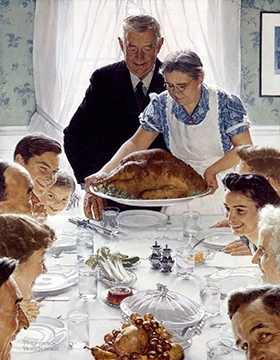
Norman Rockwell.  "Freedom From Want."
Norman Rockwell. “Freedom From Want.”

For the most part, the members are having none of it.  They want to talk about macaroni and cheese.  Stuffing.  Pumpkin pie and cranberries from a can.  One woman mentions waking her daughters late in the evening, dressing them, and taking them shopping at midnight. I would have loved that, I think.  She is creating tradition.

I think about living in California and riding my bike Thanksgiving morning – before the feast at Tim’s house.  I think about the printed menus Tim placed at each seat, like Martha Stewart.  About roasted root vegetables and pumpkin gnocchi.

I think about the year I got married and leaving for my honeymoon on Thanksgiving Day.  Eating breakfast with Tim and his roommate, Steven at the International House of Pancakes near the airport.

I do not mention any of this.  It is their meeting.

The exhibit moves from still life to real life.  There are rationing cookbooks.  Bright Spots For Wartime Meals – a Jello cookbook.  The words, “Armed with a can opener, I become the artist-cook, the master, the creative chef,” from the Can Opener Cookbook, are stenciled on the wall.

They remind me of a story I once heard about the “original foodie,” M.F.K. Fisher.  Suspicious that her celebrity kept those about her in silence, she once made a meal entirely from canned foods.  When her guests swooned, confirming her intuitions, she informed them of the origins of their dinner.

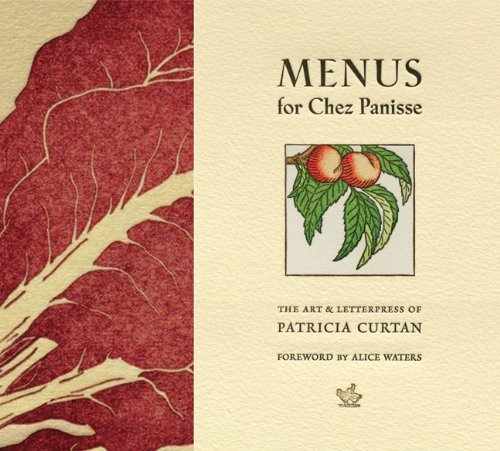
There is a menu for a meal honoring Fisher, created by Alice Waters, owner of Chez Panisse.  She is the Berkeley, California chef known for purple hats, and for bringing seasonal, local ingredients – cooked simply, cooked well – back into fashion, beginning in the early 1970s.

And there is a menu from Chez Panisse, celebrating Bastille Day in 1976, as well.

chez panisseI ate there just once.  On my birthday.  I do not recall which year.  I saved the menus – prix fixe, with gorgeous drawings of figs on the cover – for a long time, imagining I would frame them and hang them in my kitchen one day, along with my food photographs.  I never did.

Strangely, I do not recall what I ate.  I remember our server.  And the cost of the meal for two – $300.

Driving home in the first snow of the season, I chew on Brazil nuts – 30 grams of them weighed out and tucked in a small plastic container.  Just a snack.  I am full on memory.

“I Love You.” “Thank You.”

My divorce buddy signed his final divorce papers today.  It’s been a long time coming.  At least from the outside looking in.

My divorce buddy took this photograph of me.

I remember the day he called and told me that he and his wife were separating.  My then-husband and I made the same decision three weeks earlier.

I call him my divorce buddy because we walked through this thing – the dissolution of marriage – together.  Hand in hand.  On occasion, literally, but mostly figuratively.

A buddy, like in kindergarten, required for just about everything.  To walk down the hall, ride the bus, go to the bathroom.  I don’t know if it was because two are harder to lose track of than one, or that if one should stray, at least he or she wouldn’t be lost alone.

That’s what it felt like.  We weren’t lost alone.

We would talk on the phone nearly every night for hours. And on the nights we didn’t talk, we texted.  Until I came to Chicago that summer – 2012.  Something changed.  Seemingly everything.

There was a chasm.  One that hadn’t been there the night before when we talked for three hours when my red-eye from Sea-Tac was delayed.  I couldn’t get close no matter how hard I tried.

My Rabbi laid it out in simple terms.  We no longer had a phone and 2,500 or so miles between us.  We were standing face to face.  I had feelings.  And expectations – although I tried not to.

I don’t know what he had.  I often said I was not “in this” alone, but face to face, I was no longer sure.

And then, when separated by miles and a phone again, we seemed to fall back into a comfortable intimacy.  I spent two weeks in Rwanda that summer, and called him from Belgium, where I stopped for a few days before coming home.

My travel companions continued down the long airport corridor to their connecting flight home, while I found myself in baggage claim – orange hard case in hand.  I ran my credit card through the phone and dialed.  It was 2 a.m. in Chicago.  I knew he’d be up.

He sounded surprised and excited to hear from me.  I told him we had to talk quickly because I had no idea how much this call was going to cost but I had a feeling it would be a lot.  (It showed up as $65 on my credit card statement.  Worth every penny.)

In Brussels, with my friend Tim.  Not my divorce buddy.
In Brussels, with my friend Tim. Not my divorce buddy.

He gave me some practical instructions about Brussels — the airport, the train and the city — and I began to cry.  He was doing “that thing” that he does.  “That thing” I always loved about him.  Even when we were both married and I had a crush on him but he had such good boundaries that I never worried about it.

He made me feel safe.  I told him that.

And then I told him I had to go and blurted out quickly, “I love you,” and before I put down the receiver he said, “I love you too.”

He had said it just once before. The night he called me to tell me he was getting a divorce.  At the end of the conversation.  When I promised him he wouldn’t be alone.  That it just wasn’t possible…thinking but not saying, “You can be with me, silly.”  Instead, I said, “I love you, my friend.” And he said, “I love you, too.”

It wasn’t a romantic “I love you.” From either of us.  Either time.  Regardless of my feelings, in those moments, my expression was pure heart connection.  I believe his was too.

Tonight he told a group of us that he signed his final papers.  My eyes welled up, tears of empathy, of gratitude and of memory.

Later, I took him aside, and told him I was sorry.  That I understood.  That I knew.  That his “news” reminded me of what we had walked through together.   He nodded and wrapped his arms around me.

I leaned into his ear and whispered, “I love you.”  Silence.  And then he said, “Thank you.”

Awful.

I wanted to tell him I knew he loved me too.  But I didn’t.  I guess because it wasn’t necessary.  Because I already knew.

Because I’ve changed just a little.  I am no longer interested in proving myself as necessary.  Indispensable.

And because our situation has changed too.

Learning he has signed his final papers, that his divorce is nearly complete, feels like an ending.   (My divorce was final in September 2012.)  That we have fulfilled our obligation to one another.  That our karmic contract is complete.

I felt a little something break off.  It felt sad.  But also necessary, right and true.

I didn’t join him and the others for dinner.  I came home – alone – instead.  Also right.  True.

Our friendship isn’t over.  We’re just no longer lost together.  We can let go of one another’s hands.

Artist Date 44: You Are Really More West African

Mary is coming toward me but I can’t place her. In fact, I don’t yet recall that this is her name.

I scan through my mental Rolodex as quickly as I can trying to match a face, a name, an experience.  I come up blank other than to know that she is familiar, and we are at my synagogue, so I figure I must know her from here.

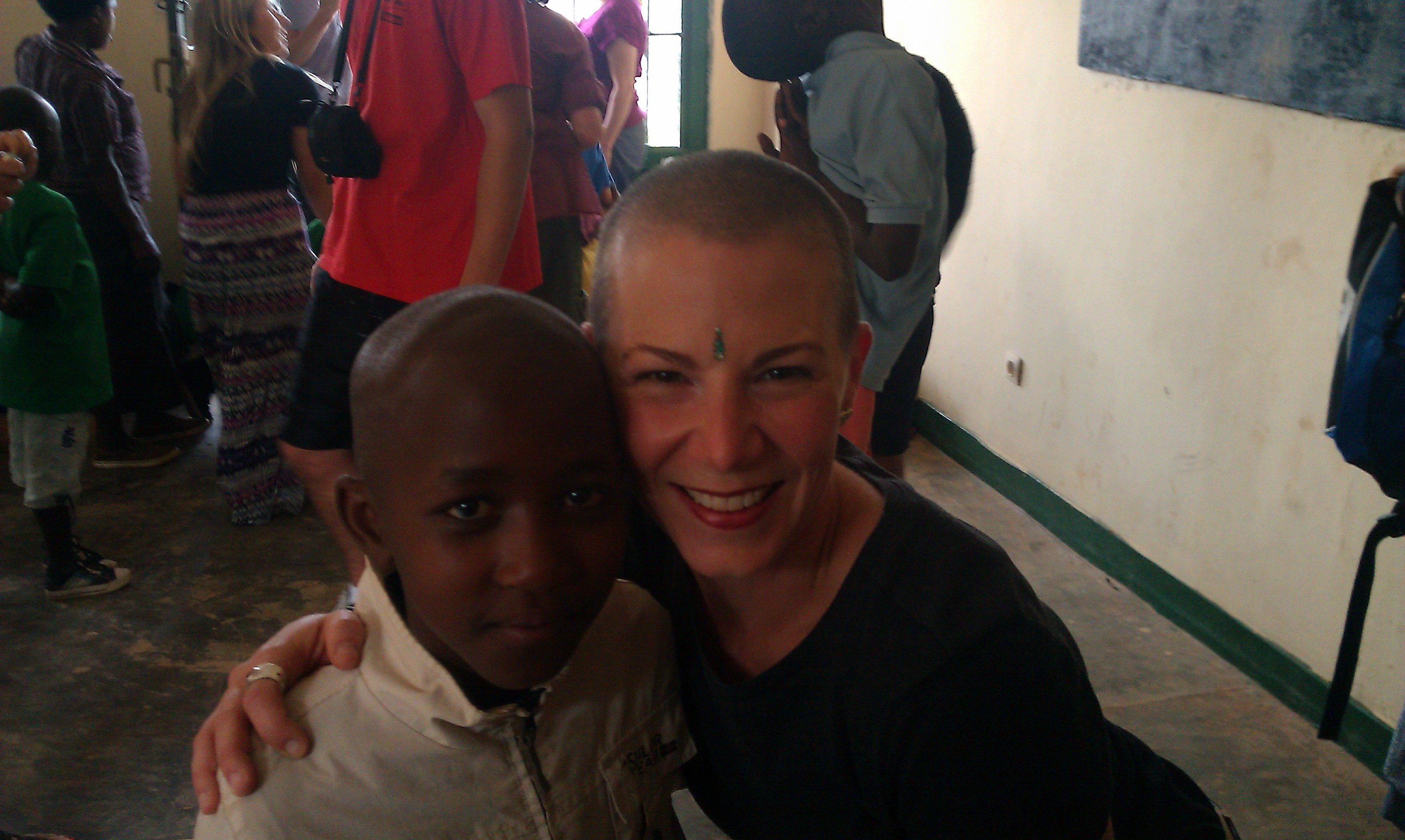
One of the many children I met in Kigali...introduced by Mary.
One of many children I met in Kigali, introduced by Mary.

She puts her arms around me and asks how I am.  I tell her I am well and she says that I look it.  Her response is genuine.  Like she has taken a few minutes to take me in.  All of me.  Like she’s seen me before.  And she has.  Even though I cannot remember where.

She begins talking about the speakers I am here to hear.  Dr. Naasson Munyandamutsa and his wife Donatilla Mukumana.  That she has been traveling with them.  Out West, where Naasson received the Barbara Chester Award from the Hopi Foundation, for his work with torture victims.  And now here, to Evanston.  To my synagogue.  My more head-y than usual Artist Date – Number 44.

Finally, I humbly admit I cannot remember her name.  It is Mary.  I tell her mine is Lesley.  She hadn’t remembered either.  Just my face.  She has seen my face.

In Rwanda.  Her name shakes something loose.  The pieces fall into place.

Mary is one of the founders of WE-ACTx – an organization supporting women and children with HIV and AIDS in Rwanda.  We met in the summer of 2012 when I traveled there with my Rabbi and members of my synagogue, the Jewish Reconstructionist Congregation.

rwanda filling rxOn the ground, we filled prescription packets, painted walls, built a library.  But mostly, we witnessed.  The people.  Their lives.  The help they required.  And the heroic, albeit shoe-string, assistance that was being provided.

It was an antidote, a balm, to the crazy, or at the very least, unsettled, that was my life at that time.

Smack dab in the middle of my divorce.  Neither in nor out.  I was living in Seattle, with my soon-to-be ex-husband, sleeping on the fold-out couch in the office.  I had decided I would decide in Kigali where to go next.  If I would stay in Seattle.  Move back to Chicago.  Or San Francisco.

Or go somewhere else entirely – like Kigali.  Where it was suggested more than once, by residents, by ex-patriots and by several of those on my trip, that perhaps I should consider staying.

All of this comes flooding back to me as Mary is speaking to me.

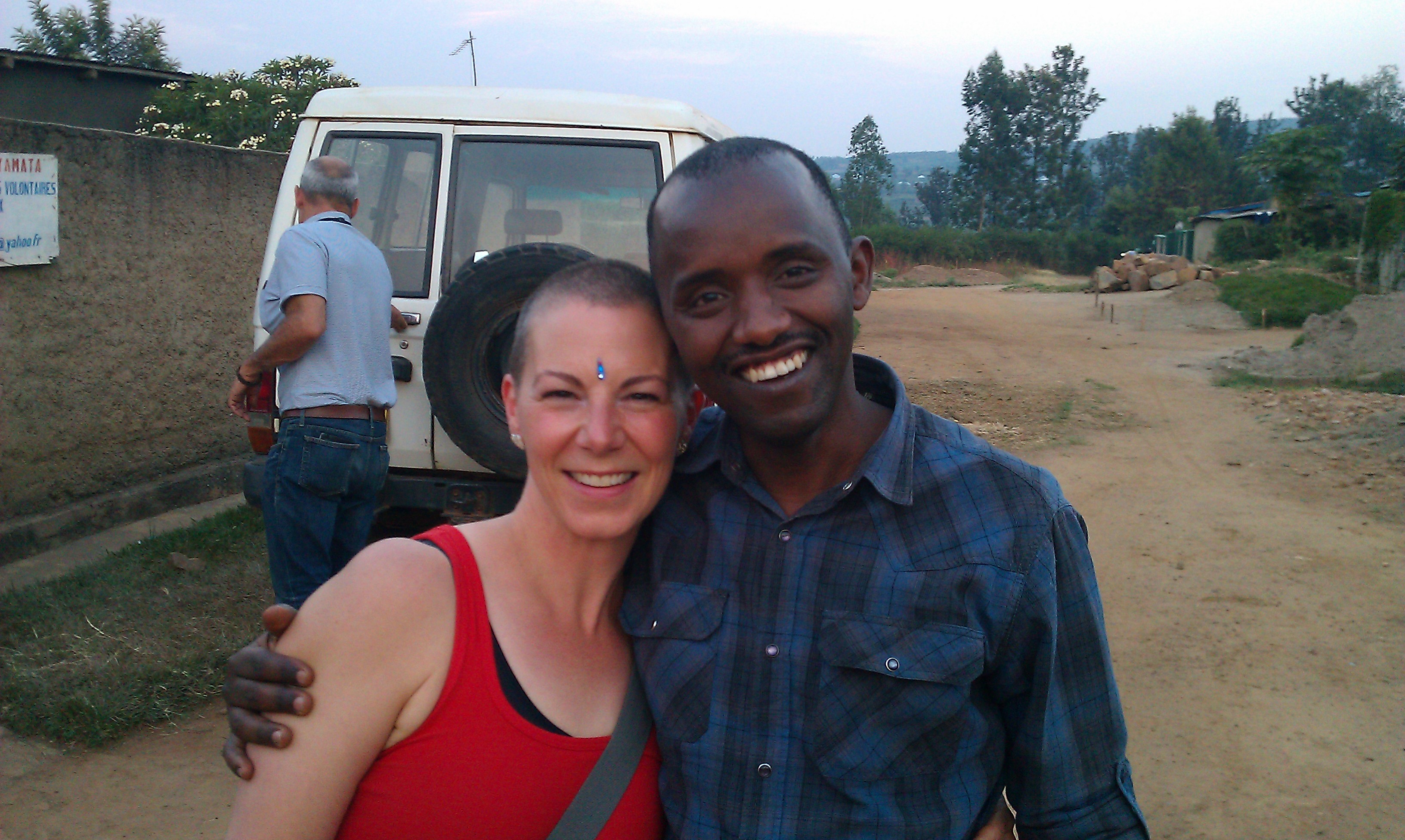
Patrick.  His greeting to me each time we met: "Liora, you should stay."
Patrick’s greeting each time we met: “Liora, you should stay.”

The bindi I wore every day – the jeweled accoutrement pasted between my eyes that I had taken to wearing.  The mark of a married women in Indian culture.  My own private, not-even-conscious, barrier between me and the world.  A secret “Don’t-even-fucking-think-of-it.”  Even though it was all I was fucking thinking about. Fucking.  Because I wasn’t.

The name I claimed – Liora, my Hebrew name.  It means “my light.”  There were two Lesley—s on the trip and it just seemed easier.  For everyone except my Rabbi, who knew me as Lesley.

The words, “It’s ok.  It was a long time coming,” that flew out of my mouth regularly.  Every time I spoke of my impending divorce, which was a lot.  It was my story, as we each told our stories to one another – 12 of us over 12 or so days in sub-Saharan Africa.

It seems a lifetime ago.

Nights under my mosquito net talking with my roommate – who, just a few months later, would begin walking through her own divorce – talking about the day.  Blogging by the light of my computer after she had gone to bed.

rwanda dance posseDancing with a professional troupe in a “cultural village” (read: Tourist Destination) near the Ugandan border.  Dancing on the hot concrete at the WE-ACTx compound and on the lawn outside of the hotel in the evening – a party thrown just for us, complete with a DJ, BBQ, and a movie – Gorillas in the Mist – shown on a screen outside, just like in Chicago during summertime in the parks.

I am jostled back into today as Mary introduces Naasson and Donatilla.

They are sitting at a table, each with a laptop computer in front of them.  His, a MAC Airbook.  Hers, an HP, like mine.

They talk about their work with rape.  With depression and suicide.  Their voices are sweet, slightly lilting.  Easy on the ear.  Their faces express nothing of the pain of their work.  Of what they, and those around them, have experienced.  It is typical for people from this part of Africa, and they speak to it – the shrouded emotional life of Rwandans.

There are only five psychiatrists in all of Rwanda.

I lean over to my Rabbi.  “It’s a good thing I didn’t stay there, “I whisper, remembering he was one of the ones who encouraged me to consider staying – perhaps his own “road-not-traveled.”

“Yes, you are more West African,” he whispers back.  We laugh.  Even though I don’t quite know what it means.  But I like it.

I like it because I “study” West African dance.  Spending Sunday mornings barefoot, moving in lines across a wood floor, supported and surrounded by a posse of drummers and other dancers.  Leaping.  Learning to shake my hips like a not-locked-up-up-tight American woman.

My heart seemingly bursting through my skin.

I don’t know anything about West Africans – other than what I experience from my dance teacher and some of the drummers.  But I know that I am emotionally “raw.”  And not just now.  That I am “wild” in comparison to Rwandans.  And to many Americans.

I like the idea of a place where people live like this.  A land of “misfit toys,” like in the animated holiday special, Rudolph’s Shiny New Year.  Where everyone’s heart is seemingly bursting through their skin.  Spilling out with love.  With pain.  With life.

When You See Yourself…or, Memory is Tricky

black beautyI stopped calling my ex by his name in writing.

It happened a little while ago, when a friend casually asked me if he minded being named.  I didn’t know.  So, I asked.

He said it didn’t matter.  But I stopped anyway.  As a show of respect.  To allow him to retain his anonymity among those who don’t know him, or me, or “us.”   And quite possibly, as another way of letting go.

I have a habit of inserting lost loves names into conversation, just to make them real.  To keep it, them, alive.  I didn’t think I was doing that with my ex – but maybe I was.

I started thinking about naming people.  I don’t do it often.  When I do, I ask myself why, and how they might feel about it.

Some people love it.  It brings attention to their art.  Or it feels like an honoring of our relationship.  On occasion, it has led to a burgeoning friendship, like with a local actress to whom I owe a phone call.

But for others, it has caused pain.

A couple of weeks ago, a friend took exception to the moniker I had assigned him.  He called me out on it – citing the sometimes negative connotations associated with it, per Wikipedia.

I was devastated.  I adore him – perhaps too much so, sometimes.  After receiving his email, I phoned him immediately.

I did not pause – even though I know better.

I got his voicemail and I left a message.  I said I regretted causing him any pain, that it was never my intention.  I shared my interpretation of the moniker.  I told him that he was my teacher.  That he inspired me.  And I told him I loved him.

That was about a month ago.  I haven’t heard a peep.  I am letting him have his space, his own experience.  This is new for me.

Something similar happened between my mother and me.

I had written about my over-emotional nature as a child – recounting a story that took place in the dollar movie theatre.   She remembered the situation differently than I.  She too called me out on it.

This time I did pause.  And because the harm was done electronically, I made amends in the same way.  I told her I was sorry that my writing had caused her pain, just as I had done with my friend.

This time the result was different.

It led us to a conversation about memory.  How tricky it is.  How three people can see the same accident and yet each remembers a different color, a different make car.

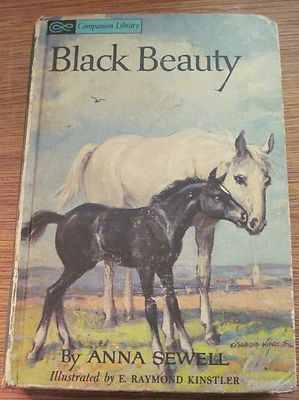
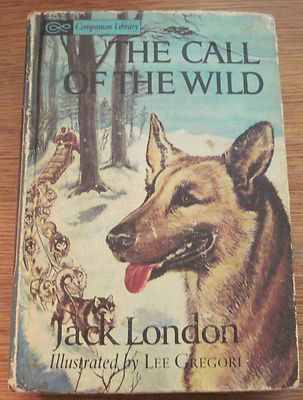
call of the wildA few weeks later I received a package in the mail from her.  Inside was a vintage copy of Black Beauty that she found in an antique store.  Actually, it is two books in one.  Black Beauty on one side.  The Call of the Wild on the other.

The memory in question was in regard to The Black Stallion, but I got it.  Completely.  I was touched by her sweet gesture, her way of letting me know we are more than fine.

A couple of days ago I posted a blog about exs.  One of them commented – favorably.

I wrote to him, “I trust you recognized yourself.”  He did, and we began chatting — online.

We too talked about memory.  About the last time we saw one another, on Venice Beach.   I had just returned my roller skates.

I remember him calling my name.  Going to him.  And him asking if he could see me.  I remembered him kissing me.  He didn’t.  He remembered me angry.  I didn’t.

I asked him what happened between us.  I never understood.  I had asked before but he never answered, and I didn’t push it.  This time he told me.

He told me that I awakened something in him.

He told me how he remembered me. Kind.  Open.  Dirty.  Loving.

He told me our time together mattered, that I mattered.  That I was important in his life, as he had been in mine.

I asked him if we might speak.  Moments later we were.

I had forgotten what his voice sounded like.  Seventeen years had passed since we had last spoken.   I felt a strange sense of relief mixed with joy.  As if to say, “Oh, there you are.  Of course.”   As if he had been there all along.  Which in some ways, he had.

A flood of memories came rushing back.  Hazy.  Not completely formed.  Together, we tried to put together the pieces.

We talked for about an hour, tripping down memory lane.  Talking about our lives today.  The time in between.  Slipping in the occasional flirty quip.  We were always like that.

I wanted to tell him I loved him, but I didn’t.  Instead, I let him know that he is in my heart and I am grateful to know I am still in his.  It is more accurate.

I feel like a piece fell into place in my life.  And a peace, as well.