Artist Date 56: Kind Of Like I Know You

2013-06-04 17.12.55
I coulda, shoulda
worn this hat this night.

It’s raining. Pissing raining. And dark. The snow from the storm which renamed this place Chi-beria is melting and I’m certain the city will flood.

And what look like parking spots in Rogers Park are a siren’s calling mix of ice, snow and deep water. My wheels are sliding under me. And then my feet, unsteady in the rain boots I never wear. The ones I bought a few years ago. That I thought could pass for winter boots as the shaft is made of grey flannel. I was mistaken.

I walk gingerly into the tiny theatre and choose my seat from the 25 or so, covered in red velvet. I lay my gloves, scarf and hat on the chair next to me to dry.

I smell like wet dog.

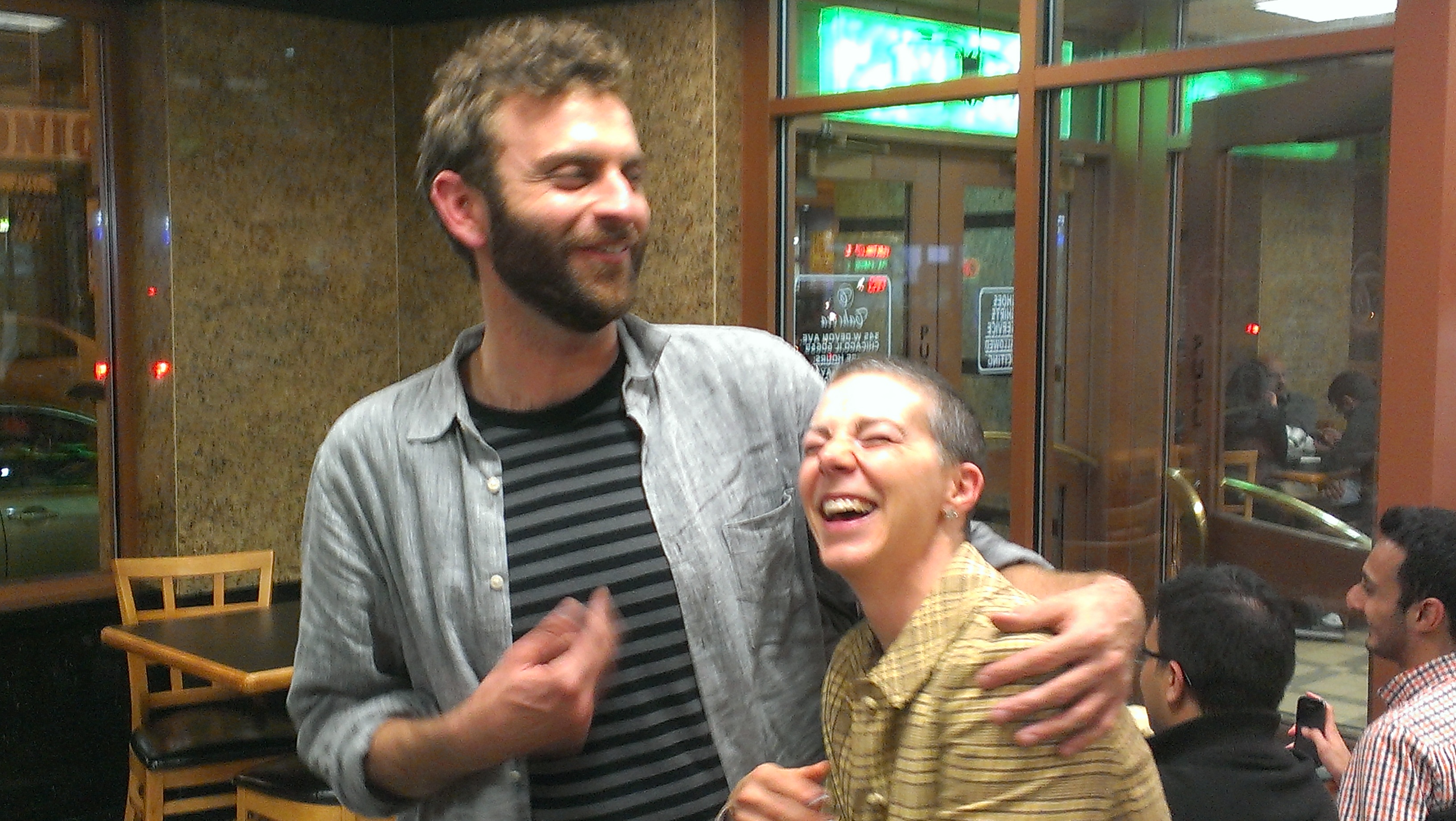
Eric Warner sent me an invitation to his performance –“A Life in Tending,” Artist Date 56 – on Facebook, just after his last performance, where he shared the stage with my friend Clover. Artist Date 45.  The same night I realized I have danced with his fiancé years.

So I kind of feel like I know him, even though I don’t really. But he greets me at the door like I do. Even though Clover isn’t here. And neither is his fiancé.

He takes me into The Purple Hotel on Lincoln Avenue with him and his friends – long after it has closed. When the ground is grown over with weeds and the swimming pool is filled with black algae. When they snuck in, several years ago. Or more to the point, when they committed a felony in the name of urban excavation. Of bearing witness.

Which takes him into his grandmother’s home.

And he takes me there too, introducing me to the fierce, loving, tough-as-nails matriarch whose only rule was “Do whatever you want but don’t burn the house down.” Who, when informed her grandson’s classmates call him “fat” and “stupid,” asks, “Do you think you are those things?” Adding that people will tell him he is all sorts of things, what matters is that he knows who he is.

It is no longer that place since his grandmother died several years ago – even though his grandfather remains. He has taken to sitting in her chair, instead of staring at the empty space, where she used to be, from his own.

Pimp or Orthodox Jew?
Pimp or
Orthodox Jew?

Her walker, commode and oxygen tank sit, as though waiting for her to return. Tsotchkes line the kitchen table, sold for a song to feed his Keno habit. And perhaps also as a way of emptying the house, so his family won’t have to when he dies.

I think of my birthmother’s home, a place I visited just three times. Once to meet her. Once to say goodbye. And once to bury her.

On the first visit, I noticed the oxygen tanks in the kitchen – she was just 56. When I returned a few years later, a walker, shower bench and commode had been added.

On the third visit, we got rid of all of it. Me, my “aunt, uncles and cousins,” all of whom I’d never met until now. Except for my aunt. And her, just once, on my second visit.

I tossed reams of paper into large, black garbage bags – notes on an unsolved murder mystery she was following, years old credit-card statements, meeting minutes from the local chapter of the Daughters of the American Revolution.

I remember standing back as my cousins fingered through her jewelry. My uncle telling me to “get in there.” I didn’t want anything, but I took a brooch anyway.

A few weeks later my aunt sent me my birth mom’s fur hat and coat –her name embroidered on the inside lining. It had belonged to their mother, my “grandmother.” I have never worn fur in my life. I cannot decide if I look like a pimp or an Orthodox Jew in it. It hangs in my coat closet still, even on the chilliest of Chicago days.

This morning, my birth mom’s son, my “half brother” friended me on Facebook. We have never met, or even spoken. A few months ago his daughter wrote to me. We exchanged a couple of emails where I filled in the blanks, explaining exactly who I was.

The timing is not lost on me.

I want to tell Eric all of this. To share my story, because he has shared his.  Because I feel like I know him.  To say “me too.” But I don’t. I do not see him on the way out and I am anxious to get home.

When I arrive I look at the calendar hanging in the kitchen – a gift from my “real” mom, the one who raised me. I’ve written just two things for January. The anniversary of my spiritual teacher’s passing, and my birth mom’s birthday. They are the same day, January 12 – this Sunday.

Arttist Date 51: Now I Know

There are a couple of memories that permeate my childhood.  Stories I asked to hear again and again until I knew them word-for-word, by heart.

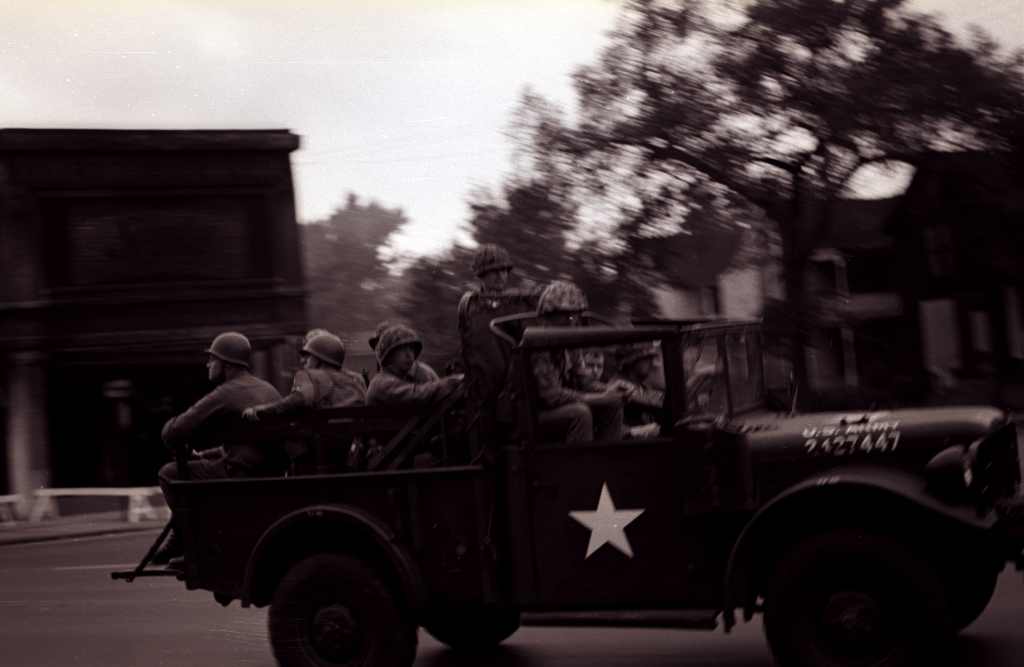
detroit 67My origins, my adoption and my first eight weeks on the planet – captured with typewriter ribbon on onion-skin paper and tucked into a red vinyl bag with my report cards and school pictures.

The loss of my mother’s biological child.  One she didn’t know she was pregnant with until she lost it.  The event which, to my mind, secured my role as my parent’s child.

The day my parents packed up their bags and their bird and moved from Oak Park to Birmingham, Michigan to live with my father’s sister for a short time.

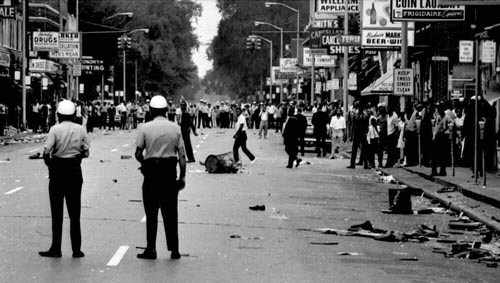
It was the summer of 1967.  The city of Detroit was on fire — literally.  Residents rioted and looted.  Police unleashed with unrestrained force.  Both the Army and the National Guard were called to quell the mayhem.

My uncle living in California called to say he was watching the news, and did my mother know that tanks were rolling down Woodward Avenue.

She did.  Oak Park was just a few miles over the 8 Mile Road border that separated the city from the suburbs.  It felt close.  Too close.  And the tony suburb of Birmingham seemed safely a world away.  So they went.

Photo by Phil Cherner

I don’t recall any more of the story than that.  How it ended.  When it ended.  When they came home.  Only that the chasm – racially, culturally, financially – between Detroit and the suburbs appeared to be sealed that summer.

Over the years I asked my parents what started the riots.  They hypothesized.  But the truth was, they weren’t quite certain.  Neither were other white people of their generation, and the one just behind them, that I asked.

I got my answers last Saturday night at the Northlight Theatre – Artist Date 51.

The first time I saw a poster for Detroit ’67, with its black upturned fist of Joe Louis, I knew I would see it.  That I needed to see it.  I didn’t consciously think I might get answers to the questions left hanging from my childhood.  I merely felt the pull, a tug that took me to Skokie on a dark December evening — alone.

The audience is mostly older – boomers and above.  Mostly African American or Jewish.  I recognize the latter by the smattering of kippot (head coverings) and conversations about Israel.  And, at risk of sounding politically incorrect, as a Jew raised among mostly other Jews, I “just know” my people.  Many of them are dancing – some in the aisles, but mostly in their seats – to Motown.

Martha and the Vandellas.  Smoky Robinson and the Miracles.  Stevie Wonder, when he was still called “Little Stevie Wonder.”

It is the music of my childhood.  The Big Chill soundtrack, and Big Chill-like gatherings at my cousin Wendy’s house.

The couple behind me is singing.  They know every word.  During the performance, they respond to the actors.  More than a mutter but not quite “out loud,” either.  I like it.  I feel like we are all, “a part of,” and I am not so much alone.

Meanwhile, I tuck into the program and get schooled.

This is what I learn:

Detroit’s 12th Street Riot began on July 23, 1967, with the police raid of a blind pig — a home illegally selling alcohol under the guise of “an attraction…with complimentary beverages.”  (Not unlike memberships sold for experimental AIDS treatments in Dallas Buyers Club.  Artist Date 47.)

The raid itself was not unusual.  Detroit’s white police officers were known for harassing, and even brutalizing, the city’s black residents.

The aftermath.  Detroit Free Press photograph.  Public Domain.
The aftermath. Detroit Free Press photograph. Public Domain.

But unlike other raids, this one did not resolve quickly or quietly.  And what began as a conflict between police and patrons soon engulfed the whole city.  To end the disturbance, Governor George Romney ordered the Michigan National Guard into Detroit.  President Lyndon B. Johnson sent Army troops.

Five days later, 43 people were dead.  More than 500 were injured, and 7,231 arrested.  Half of those arrested had no criminal record.  Sixty-four percent were accused of looting and 14 percent were charged with curfew violations.

Losses from arson and looting ranged from $40 to $80 million.

But I don’t see any of it.

Only the actions, and reactions, of five residents of Detroit, black and white, who want to feel safe.  Who want something better for themselves.  Not unlike my own family.  In a basement in the city’s near west side, with an eight-track player, a phonograph that skips, and a dream.

Artist Date 45: The (Sometimes) Kindness of Strangers

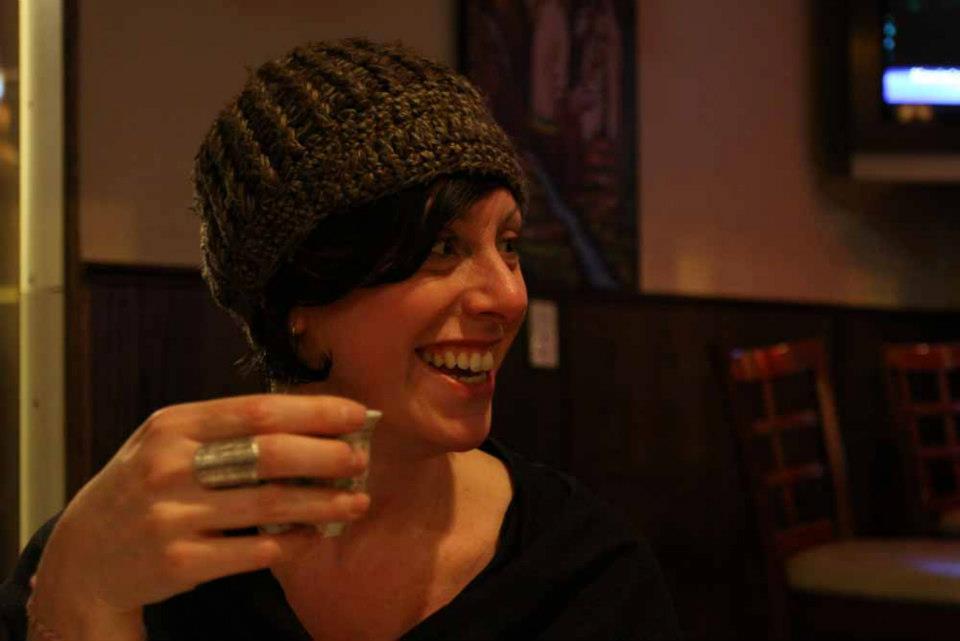
This woman is wearing a knit hat, striped in colors of the Rastafarian flag.  It was a gift from a woman in Australia, while she was in Australia.  A woman who fed this woman lunch and beers but accepted no payment.  Her listening to the stories she was regaled with was payment enough.

kindness of strangersPlus, she would need it while camping in the outback.

She flew to Australia following the demise of a relationship.  Seems it is what she does.  Camping in the Outback.  Hiking in Wales.  Meditating on a mountain outside of Tokyo.

She is standing on a small stage in Rogers Park talking about it.  Coming clean, as it were.

Artist Date 45.

My friend Clover will also be reading and performing a piece .  It is about her mother.  About art school and being a performer.  About helping a man across the street who has fallen and everyone around him just keeps moving as if this hasn’t happened and the universe calls upon her to play the part of his angel.

There is a third.  Eric.  Who will talk about his need to go to a place where his father had been.  The father he didn’t know.  And then he did.  But who he never really knew.  And is now dead.

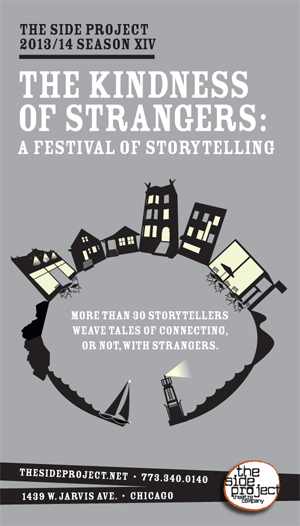
But right now I’m watching Jennifer.  I know her name because I looked it up in the program, which is black and white.  Folded but not stapled.  And reads, “The Kindness of Strangers: A Festival of Storytelling.”

And then, “A 3-week rotating mix of more than 30 storytellers weaving tales of connecting, or not, with strangers.”  The words encircled by drawings, like a globe – buildings, a boat and a lighthouse, water.

I want to be this woman with a knit hat and a beer-stained hiking map, marked up by pub patrons who laugh each time she says the word “garbage.”  This woman who takes off on serious adventures – by herself – when love goes south.  When the re-bound from the break up proves not to be the antidote to her pain.  Who is standing on this tiny stage telling her story.

I want to be that brave.  To travel alone.  Even though I’ve done it – albeit briefly — and my experience is that solo travel is most satisfying when it is connected to purpose.  And people.  Like my volunteer trips to Rwanda and the South of France.

I want a rebound.  Even though it has been suggested I don’t date.  Even though I have probably been divorced too long for anything to be called a rebound.  And my short-lived dalliances, both emotional and physical, have been painful to the extreme.

Even though my experience of being alone this past year has brought me closer to myself.  My craft.  My writing.  The very thing that might put me on stage.

Clover.  Very likely telling a story.  Just not on stage.
Clover. Very likely telling a story. Just not on stage.

I am comparing my insides to someones outsides once again.  Devaluing my own experience when confronted with someone seemingly doing what I think I’d like to do.  What I think I should do.

I well up listening to her.  While the details are different, I recognize the story as my own.

I see pieces of my story in Eric’s too.  Reconnecting with a parent who was physically absent for so many years.  His through desertion.  Mine through adoption.  Losing them again.  And what is left.  For him, a ring.  For me, a pair of opera glasses and a too-big mink coat, her name embroidered on the inside, hanging in my closet.

But I do not see myself in Clover’s story.

I’m not even looking, let alone comparing.  It is not that I am not interested.  I am.  I am teary, ass-glued-to-the-seat, riveted.

Maybe it is because I know her story.  Her stories.  She has trusted me with them over the years.

Her mother selling her art work, without her consent, as payment to her therapist.  Lying down in the street in downtown Chicago when the light is turned red.  A classroom performance piece.  The ants that crossed in front of her mattress, on the floor, in the basement of her mother’s friend’s house, in the toniest part of upstate New York.

And I have trusted her with mine.  They are less the same.  But our feelings, and our responses, match perfectly.  This is where we found our “me too’s.”

Like I am just now doing with Jennifer.  With Eric.  Connecting with strangers – who may or may not become more than that.  (Turns out, I have danced with Eric’s girlfriend on and off for years.  I’m pretty sure I’ll see both of them again.)  The place of beginning.

A Birthday Story: Celebrating What Is

It is four something in the morning.  I woke up at the same ungodly hour yesterday – my 44th birthday.

I have always loved birthdays.

My birthday didn't begin with laughter...it ended with it.
My birthday didn’t begin with laughter…it ended with it.

I’m a big celebrator in general.  Ask any of my Weight Watchers members.  I love to clap and give out Bravo! Stickers for behavior changes.  Those subtle little miracles.

“Where else do you go that they clap for you?” I ask.

Well, 12-Step meetings.  But I don’t bring that up as it isn’t germane.

Birthdays are like that.  It seems the whole world is clapping, rooting for you, that day.  Mostly.

This year I awoke feeling a little less clap-y.  A little less celebratory.

I’d been aware of a low-grade sadness tugging at me for a few days.  Aware this was my first birthday since my birth mother died.

We found one another in October of my 40th year.

Ours was not always an easy relationship.  Some days I think she would have jumped in my skin if she could have, while I took a more tentative approach to our relationship.  Timing.  Expectations.  Boundaries.  Those were our lessons.  And we were one another’s teachers.

She sent me flowers when I turned 40.  A card the following year.  And then phone calls the next two.  She wasn’t well and it was difficult for her to get out – both physically and emotionally.  This year there would be no flowers, no card, no call.  I felt sad.

Like I did when her name was read at the memorial service on Yom Kippur.  Like I did when I returned from Ireland last month and felt like calling and for the first time realized I couldn’t.  I find myself surprised by the sadness, although I’m not sure why.  It makes perfect sense – at least on a cellular level.

So there was that.

And there was the aloneness of being not-so-suddenly, but-still, single.

My ex was a great gift giver.

Birthday and anniversary mornings I would find a card on the bed, slipped into place when I got up to shower.  A gift would come later.  Usually something I had spied and mentioned in passing months earlier.  Something I had forgotten about until I saw it again.  A hand-carved wooden jewelry box.  Strands of smoky quartz and hand-colored pearls.

2013-10-20 20.19.35
Kristin. Who reminds me of the love in my life when I cannot see it.

He gave me a watch when I turned 42 – my last birthday with him.  I had been wearing the same Seiko tank since I was 14, gift from my Aunt Betty.  She had lost hers.  Found it.  And gave the original to me.

I replaced the band and battery several dozen times over the years.  Until the crystal broke and a jeweler told me it couldn’t be fixed.

I didn’t like the watch he bought me.  I don’t know if I would have liked anything he bought me at that time.  He had recently asked me for a divorce – and then recanted the next day – but it was there.  The truth about our relationship.  It was over.  We just hadn’t cut the cord yet.

He was hurt and offended that I didn’t like his gift, but offered to take me shopping so I could pick out something else, anyway.  I couldn’t do it.  I kept the watch.  I am still wearing it.

When I woke up early yesterday, I noticed the absence of a card.  Of a body in my bed.  Specifically, my ex’s.  I do not crave him being there – but I was used to it.  To him, for so long.

I rolled off my mattress and dropped to my knees in child’s pose – both a stretch and a prayer.   “modeh ani lefanecha.  Thank you G-d for returning my soul to me.”  I asked for several obsessions to be removed.  And then, still on my knees, I opened Facebook on my phone.  The messages had already begun to pour in.  Old neighbors.  Acquaintances from grade school.  Family – by origin and by choice.  From Africa.  And from just down the street.

I wrote. Meditated. Showered and went to work.  Weight Watchers.  It felt life affirming.  As did dance class.  I made lunch and took myself shopping at my favorite resale shop.  I bought a grey wool coat that ties at the waist.  It fits as if it were made for me.

I talked to a few friends on the phone.  Around five a girlfriend picked me up and we went to do what we do to make sure we don’t drink today.

I used to make a big “to do” out of my birthday.  Or at least try to.  Those expectations often left me feeling sad and frustrated.  I was unclear why.  But today was delightfully ordinary.

Indian sweets.
Indian sweets.

It ended with cheap eats at a large, bright Pakistani restaurant on Devon Avenue.  The kind with a menu posted on a TV screen.  Where you wait in line to order food and pick it up on a tray.  Where you eat with plastic utensils.

Where I feel conspicuously white.

There were eight of us.  Among them, my divorce buddy – the man I walked lock step with through the dissolution of our marriages.  And then watched my friendship with him dissolve.  I hadn’t invited him.  But there he was.  I was delighted.

“Of course he’s here,” Kristin said.  “He loves you.”

I decided to believe her.  And to believe in all the love around the table.  JB’s.  Tom’s.  Matt’s.

Rebecca’s.  Brian’s.  Kristin’s.

And to focus on it.  To focus on who was there, instead of who wasn’t.  The calls, texts, cards and Facebook greetings I did receive.  Instead of those I didn’t.  (Well, mostly.)

We took pictures and ate fried bits of goodness – both sweet and savory.  Drank lassis and tea with evaporated milk.

I came home and ate the last of my sweets.  I felt a little overly-sugared.  Overly stimulated.

And I fell into bed.  Alone.  Sated.  Full.

Mourning Pages

This piece was recently published in Catharsis Journal: How Creativity Changed My Life. Krista Burlae, Editor. Balboa Press. 2013

“I am alone because I am getting ready to be alone.”

Every day the same words spilled out of my pen and onto my notebook.  It was March.  I was staying at a friend’s house in Northern California, while she and her partner were in Hawaii.  In their week-long absence, they left me their home, a car and a neurotic dog named Zach.

Every morning was the same.

I’d mash a banana into a bowl; cover it with dry oats and water and microwave for three minutes – adding blueberries and soy milk after cooking.  French press a pot of coffee.  Open the sliding glass door for Zack to go outside.  Sit at the table next to fireplace and write three pages, longhand.

I was in Week 4 of Julia Cameron’s The Artist’s Way – A Spiritual Path to Higher Creativity.

The book had been suggested to me for nearly 18 years, but I had only recently picked it up.  Pain is a great motivator.  So is time.

I was living in Seattle.  I’d been there just a little more than six months.  It was my second cross-country move in less than five years.  The first, to Chicago from San Francisco, for my husband’s medical residency.  The second, to Seattle, for his dream job.

Both times, I closed up my massage practice.  Handed over my Weight Watchers meetings to another leader.  Threw a send-off soiree, and said a tearful goodbye to my friends.  Following in his path.  Next time would be my turn.  That was the promise we made.

I wasn’t working much.  I didn’t have a massage license.  I was clinically depressed.  My husband encouraged me to take it easy.  He reminded me that his job as a doctor, and the six-figure salary that went along with it – that it was for us.  That this is what he had been working for.  That now I could breathe and think about what “my turn” might look like.

I hadn’t a clue.

Rabbinical school?  Acupuncture school?  Nothing seemed certain.

Devoid of any clear sense of direction, I picked up the book that had been recommended to me so many times over the years.

I dug in with a hunger and willingness I hadn’t known since getting sober nearly five years earlier.  I read each page carefully, highlighter in hand, taking notes in the margins.  Looking for a clue.  For a promise of direction.  Or at the very least, something meaningful to do with my time.

Each week had a title.  “Recovering a Sense of…” – fill in the blank.  It included readings, suggested exercises, and questions for reflection at week’s end.  Two constants ran through the entire 12 weeks, what Cameron calls the primary tools of creative recovery – Morning Pages and the Artist Date.

Morning Pages were simply that – three pages written longhand, first thing in the morning.  Before diving into email.  Before opening up the newspaper.  Before dressing children.  Cleaning the house.  Talking to the nanny.  Making dinner plans.  Before Pilates.

Morning pages were not meant to be art.  Or for anyone to even read.  They were a practice.  “Spilling out of bed and straight onto the page.”  Without expectations.  Without judgment.  Simply making room for new input.  Morning pages, she said, were non-negotiable.

An Artist Date was a kind of fancy, little-bit grown up, name for a play date – alone.  No friends.  No spouses.  No children.  A block of time for spoiling and nurturing oneself – creatively.

*****

The tools gave my life structure.  Something to hang my day on.  I would wake early each morning, before my husband, make oatmeal with blueberries and banana, coffee, turn on my light box and write.

The routine was established by the time I arrived in California in March.  I found it easy to recreate my process in this new, albeit temporary, space.

I had begun to notice patterns emerging in my morning pages.  The same themes popping up like whack-a-moles again and again.  But I didn’t have to race to pound them down with a big, padded mallet.  I could let them sit on the page.  Powerless.

So I wasn’t exactly surprised when I wrote, “I am alone because I am getting ready to be alone.”  I knew exactly what it meant.  And I wasn’t afraid.

*****

We had been struggling for a while.  Pretty much since we arrived in Chicago nearly five years earlier.  He started medical residency.  I quit drinking.  Our lives took radically divergent paths.  And like a vector, kept moving further in opposite directions.

Nine days before we left Chicago, he told me I didn’t have to go to Seattle.  He didn’t want to be the guy who once again took me from my home, my friends and my livelihood.  I was shocked.  Stuck.  I couldn’t turn around that fast, even if I had wanted to.  Besides, we had already rented out our condominium.  I’d given up my office and my work.

We moved forward – together – as planned.  We hosted a going-away party that weekend – assuming our roles in the story of us as happy couple.  And a few days later, we were gone.

Within weeks of arriving in Seattle, my husband asked me for a divorce.  The next day he retracted his request and admitted he might be acting hastily.  We agreed to see a couple’s counselor.  A smart, young woman, many years our junior, who asked, “How will you know?”  Meaning, how would we know when it was time to call it quits.

Neither of us could answer.  I meditated on the question all week.  The words came to me in the stillness of waiting.

“You know what not working on your marriage looks like.  Why don’t you see what working on your marriage looks like?”

I instantly felt a shift in my body – as if I had just experienced a chiropractic adjustment.  I had an immediate sense of ease.  An increase in energy and flow.  I knew it was right.  I told my husband, and together we told our therapist that we had decided “not to decide,” for six months.  Instead, choosing to focus our energies on the work.

It was during that six-month period that I went back to California, stayed in the big house with the fireplace and the neurotic dog, and wrote the same words each day.  I shared them with no one.

***

My husband flew down to join me at the end of the week.  Before picking him up, I met with a local Rabbi.  He replaced the one I had studied with many years earlier, before I was married.  He had died unexpectedly.  His passing was a source of remorse and pain, mostly as we had never completed our studies.  I had slipped away without a word.  Just about the time I met my husband.

I told the replacement Rabbi that I might want to be a Rabbi.  But that I couldn’t see how to do it, to stay married, and continue to work on my marriage.  He said if it was my path, it would find me.

My husband and I greeted one another at San Francisco International Airport, irritated, obligated.  I remembered coming home from a trip, not long after meeting him.  He met me at the gate, flowers in hand.  I literally ran to him and jumped into his arms, wrapping my legs around his waist.  We were no longer that couple.  And we hadn’t been for a long time.

I drove us back to the big house with the glass fireplace and the neurotic dog.  I told him about the flood of memories that I had experienced that week.  That they had nearly drowned me.  That everywhere I turned, I was reminded of us.  Especially of the hours we spent together on our bikes.

“It got too hard,” he said.  “I didn’t want to do it anymore.”

“Ride with me?” I asked, referring to the chasm between our cycling abilities – a regular source of tension between us.  “Or be married?”

“Both.”

And there it was – the truth that I had written every morning.  The truth that I knew because I did write every morning.  The truth that I had known in my bones before he ever arrived.

I wish I could say I was calm.  That I stood in awe of my knowing.  In awe of the serendipity.  That the truth was spoken in the city where lived together for nearly 10 years, in the neighborhood where we met.  But I wasn’t.  My wheels rolled on to the Golden Gate Bridge.  I thought about driving off.  Instead, I yelled.  A lot.

I was in the middle of Week Four in The Artist’s Way – Recovering a Sense of Integrity.

******

Returning home to Seattle, I named The Artist’s Way my companion in divorce.  It seemed the only thing I knew to do.  That, and walk.  Miles and miles with no particular destination.  The heels of my tan suede boots were re-soled during this time.

I continued to write.  To look for synchronicity in my life, as I was directed in the book.  Truthfully, I couldn’t imagine any greater synchronicity than what I had just experienced.

I went on occasional Artist Dates but couldn’t fully commit to the practice.

I bought The Writer’s Market and considered writing again professionally.

I made Benjamin Franklin T-squares, lists of pro and con, trying to determine where I should call home.  Seattle?  Chicago?  San Francisco?

I sent The Artist’s Way to my friend in Chicago who was also going through a divorce.

I told him it was a book of miracles, my trusted companion during this time of transition.  I told him about my morning pages.  About being in that house alone and knowing that I was preparing to be alone.

I told him about the Rabbi who said if rabbinical school was my path, that it would find me.  And that my husband asking for a divorce felt like being found.  That I had become open to these messages because of the book.  And because of the creative work I had done.

I finished the 12 weeks of The Artist’s Way.

And then I went to Rwanda.

I had planned the trip several weeks earlier.  I would be traveling with members of my synagogue – touring, witnessing and working with two different AIDS organizations.  It was there, under my mosquito net in sub-Saharan Africa, that I heard the next creative whisper, received my next set of instructions.

I started blogging.

****

I entered university nearly 25 years prior, majoring in fine art.  I graduated with a degree in journalism – my parents insisting I choose a more practical focus.

I spent the next five years toiling at a series of weekly newspapers, and then left the profession entirely.  I wanted to make more money.  Which I did.  I wanted to tell my stories, instead of someone else’s.  Which I didn’t – unless you count drunken scrawls in journals and poems stuffed under the bed.

In Africa, I wrote each night before bed.  After my roommate and I finished debriefing about our days.  When the sky was navy and the air was still with silence – nothingness.  I wrote by the light of the computer screen.

I described the land, its people and my experiences with both in lush detail.  The smell of oranges mixed with diesel.  Churches where bloodied clothes remained, remnants of the most recent genocide.  Children born with HIV acting as mentors to those younger than themselves, also born with the disease.

The houses made of mud brick.  A calendar on the wall – a single decoration.  The woman who built her own house, and then another which she rents.  Who sells charcoal, and can now care for herself and her children – mostly.  Women and children robed in colorful fabrics, walking on the side of the road – 24 hours a day, fruit or furniture balanced on their heads.

Reed thin men pushing bicycles weighted down with four or six yellow jerry cans of water.  An opening gala at an art co-operative tucked into a downtrodden neighborhood.  Peeing ridiculously close to a giraffe while on safari.

I posted my blogs to Facebook in the wee hours when I could get an internet signal.  Following each posting I was greeted with words from the unlikeliest of Facebook “friends.”  Girls I went to Adat Shalom nursery school with in the early 1970s, friends’ husbands I hardly knew, and associates of my Rabbi.  They all said the same thing.  “Thank you.” And “Keep writing.”

But I didn’t.  Not for three months.  I didn’t write about my divorce.  My drive cross country.  My first time living alone in 43 years.  I didn’t write a word – until I received a call that my birthmother was dying.  A woman I had met only three years prior, who at 59, was dying.

I flew out of Chicago the next day, pacing just in front of Hurricane Sandy.  When I arrived she was hooked up to IVs and monitors, barely 100 pounds in a hospital gown.  There was nowhere for her to hide anymore.  She could no longer act the part she thought I wanted her to be.  We were both stripped down and naked.  And I felt, perhaps for the first time, nothing but love for her.

I played Pandora radio for her.  Danced and held her hand to Love Train by the O Jays.  I massaged her feet, her papery skin.  I sobbed on her bed.  And I found healing.

I told her about a man I met there in South Carolina.  How he swept me off my feet – literally picking me up off of the ground the first time I met him.  And how he broke my heart a few days later – slipping away without a word.

I chronicled all of it, blogging.  My inbox filled with personal notes.  Words of encouragement.  Stories shared.   From former co-workers.  Friends of my birthmother.  Cousins I had never met.  Even the man from South Carolina who broke my heart.

I felt seen.  Connected.  The connection I had craved all of my life.  That I had twisted myself inside and out for.  Here it was.  And all I had to do to receive it was to tell my truth.  To write it.  And to share it – publicly.

So I did.

I wrote about living alone.  About throwing out food because I didn’t know how to shop for one anymore.  About my Jewish divorce – my Get…  And my civil divorce.  About my breast reduction – a surgery so fraught with pain and shame I had barely spoken of it.

And then, about my second time through The Artist’s Way.

***

I didn’t date after my ex-husband asked me for a divorce.  I experienced intimate friendships – hours spent on the phone telling one another every detail about ourselves.  Sexy kisses under the moon that made me feel like I was 17.  Over the top expectations and the crash that accompanied them.  But I had not dated.

I wasn’t ready.  I was too vulnerable.  But I was lonely.  So I took on The Artist’s Way again as my companion, this time committing myself to the Artist Dates.  Those two-or-so hour play dates by myself.

I perused gourmet food shops.  Spent hours at a bookstore, tucked in a chair with an Annie Leibowitz anthology in my lap.  I bought myself little trinkets and had them giftwrapped.

I went to the movies.  Walked on the beach in winter.  And at the bird and butterfly sanctuary.  I scoured thrift stores.  Visited the polar bear at the Lincoln Park Zoo.

I went to the art supply store. And to the Art Institute – many times.  Visiting Marc Chagall’s America Windows again and again.  I went to the Lebanese and Indian neighborhoods.  Ate syrupy sweet desserts and shopped with women wearing saris and chadors.  I popped into interesting boutiques I’d eyed and wondered about, but had never stepped foot in.

I went to the Joffrey Ballet.

All of it, alone.  And then I chronicled each experience.

I wrote about my ex-husband sending me boxes of things I left behind, and not wanting to open them.  About being afraid of Week 4 in The Artist’s Way because that was the week my ex asked me for a divorce.

I wrote about how strange and uncomfortable it was when my father asked me if I was dating.  How uncomfortable he was when I said no, and how I felt the need to explain my decision to him.  How I told him that I had work to do.

I let go of work I no longer enjoyed, and leaned heavily into my spousal support.

I took dance classes – Mambo and West African.  I attended performances and lectures – on my own and with girlfriends.  I began cooking again.  Collaging.  And I kept writing.  Blogging.

The Artist Dates had become a habit.  I enjoyed a $6 piece of torte and coffee served on a silver tray on a Friday afternoon, just because.  I brought home a silk kimono from Japan and an embroidered, well-loved bedspread from the thrift store, just because they were beautiful.

I began to treat myself as well, if not better, than anyone else had ever treated me.

I began to turn inward, to lean into my pain.  The hurt of love ending.  Of promises broken.  The fear of a big, empty canvas of life.  I gave it a name and a face – with words, and with paintbrushes, pencils and pretty paper, with movement.  And I found it wasn’t quite so scary when I did.

I found my voice.  The one that wrote, “I am alone because I am getting ready to be alone,” continuing to spill out of me every morning and onto three blank pages.  Mourning pages.

Artist Date 33: Done. Saying Goodbye to Nin.

nin

I didn’t want to glaze tonight.  I was done.

Done.

With my day.

I’d already snagged decidedly gorgeous, flimsy, French panties and bras on sale.  Seen a Tina Turner impersonator on Michigan Avenue.  A pretty good one.  And connected in that profound way that strangers sometimes do with Yahkirha, a Red Cross worker fundraising across from Millenium Park.

Done.

With my pottery class.

It ended two weeks ago, but I still had two mugs and a woefully off-center bowl to glaze and finished pieces to pick up.

So I went, anyway.  My ex called while I was walking there.  As soon as I picked up, I knew something was off.  I could hear it in his voice.

“I have to put Nin down.”

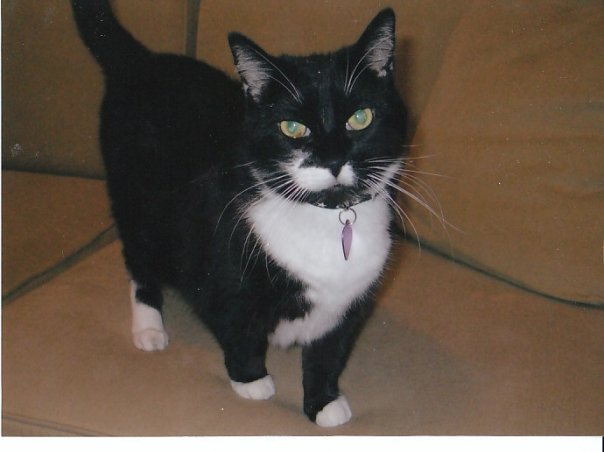
nin 3Nin is our 19-year-old cat.   Correction.  She is now HIS 19-year-old cat.  She looks like she is wearing a tuxedo, with her black body, white chest and milk mustache.   Her sexy, sleepy eyes reminded me of Anais Nin – ergo, her name.

We adopted her in 1999.  Our friend, Tim, arrived home that day from a year’s sojourn in Chicago.  He called from Tahoe to say he was on his way, and drove his truck straight to Berkeley to meet us for brunch.

After, the three of us wandered into the pet store next door.  And I walked out carrying cat number two.

According to my ex she’s having trouble using her back legs.  She can no longer pull herself up on the bed to sleep with him.  Today he came home and found she had peed all over herself.  As we were talking, she went to the litter box and simply lied in it.

Uncontrollable tears streamed down my face. “Put her down. Put her down.” I repeated the words over and over like a mantra.

He thanked me.  Said he needed to hear me say those words.  To make it ok.

Another piece of our shared life together fell away.

I thought about changing my course, turning around and going home.  But something wiser in me told me to keep walking, up the ramp and into the Lill Street Clay Studio.

Robert, my teacher, was giving a demonstration to the new class.

I wandered back to the carts holding fired pieces.  Some complete, some bisqued – waiting for glaze and a second fire.  I began the tedious and time-consuming process of locating my work – picking up every stoneware cup, bowl and tray, looking for the etched LMP on the bottom.

Melanie was doing the same.  She traveled to Seattle during our five-week class.  I sent her to Flora for dinner and Molly Moon’s for ice cream – honey lavender.  I was happy to see her.

Sifting through the pieces, I admired other’s work.  A deeply tinted bud vase, kissed with a tear drop of shiny blue.  A sculpted hand.  Melanie’s star-shaped badge, stamped with the word “rock.”  She wasn’t thrilled with how the glaze turned out.  I thought it looked awesome.

Kevin was there too.  A principal dancer with Hubbard Street and a fine beginning potter.  I got to know him a little bit one Saturday evening when we both went in to the studio to practice.  I watched bowl after bowl come off of his wheel while I just tried to master centering.  I never did.

And Lori.  We met a couple of weeks ago.  She was glazing a lidded pot with a brush.  She had etched cherry blossoms on to the side.  It was elegant.  Lovely.  The kind of work I dreamed of making but felt years away from.

That same evening, she showed me some tea cups she made.  Delicate cone shapes with carved out handles that looked like wood. Porcelain – glazed yellow salt.

She’s been throwing for just 10 months.  It looks like 10 years.

2013-08-03 16.47.16Eventually I found my pieces.  The slab tray buckled.  It was too thin.  But the bowl that Lori helped me glaze looked pretty good – my best piece yet.  She said my mug looked really good.  I told her it wasn’t my work, that Robert made it and gave it to me to glaze.  We laughed.

I told her about Nin and not wanting to glaze.

She told me about her best friend unexpectedly dying and how she wanted to cocoon but knew he wouldn’t want that.  That he would want her out in the street calling his name.  So she did.

We talked about pottery and writing and relationships.  She helped me glaze one of the mugs, filling the inside with one of the variety of whites.  And when it was dry we lowered it into a vat of rutile blue, then turned it upside-down and “kissed” the glaze a final time around the rim.

I watched her glaze several more lidded pots, a large tea-cup like the smaller ones she had shown me, and a tall, thin bottle – lowering it into the vat with her finger tucked inside.

I watched the patience and care she devoted to each piece.  I do not have that patience.  I am not so exacting.  At least not in this moment.  Not about pottery.  I realized this is what anything “good” requires – attention, time, care.

The same attention, time and care I take with my writing, my food, my clothing.  The same attention, time and care my ex takes with the cats, Nin and Maude.  The very reason I left them with him.

I put my pieces on the cart to be glazed.  Wrapped my finished bowl and tray in newspaper and put them in my bag.  I thanked Lori for her help and said goodbye to Melanie and Kevin.

Seems I wasn’t quite done.

Turns out, neither is Nin.  I talked to my ex.  He couldn’t get an appointment with a vet until Sunday.  He said she seems comfortable.  Slow, but comfortable.  Purring.  I trust him.  I trust his attention, time and care.  I always did.

My Last Conversation With My Birth Mom. Part Two.

My birthmother and I.  Our first meeting.
My birthmother and I. Our first meeting.
I said I didn’t remember my last conversation with her, but that isn’t exactly true.  For truly, the last one — the most recent — was on Sunday, Mother’s Day, after her funeral.

After I met my Uncle Thom for the first time.  The one who called me when she was dying and when she did die.  Who I knew from Facebook and with whom I share a special connection.  Who, after we embraced, said, “Come, meet the rest of your family,” and introduced me to uncles and cousins and spouses while I wept behind my sunglasses.

After I met her friends from the Daughters of the American Revolution.  The ones who told me how happy they were for our reunion.  The ones who knew every nuance of our story.  The ones who said I looked “just like my mother.”  And whom I felt no need to correct with terms like “birth” or “biological mom.”

After I introduced myself to the minister and he threw his arms around me and pulled me to him.

I hadn’t made it to town in time for the viewing.   The funeral was closed casket.  My Aunt Julie made arrangements for me to see her at the funeral home after the ceremony.  Before I went in, I called her and asked if I might tie a red thread around Pharen’s wrist, like the one I wear.

I explained in Kabbalah, mystical Judaism, this thread represents protection.  That one wears it on her left wrist, the pathway of the artery to the heart.  That one was placed on me after my Jewish divorce so that I would be reminded of what I am moving toward.  For me, it is greater love.  I didn’t know what it would be for Pharen.

She gave me her blessing and suggested I ask the director for help putting it on her.

We slipped the thread over her clawed hand and I tightened it.  The skin of the dead feels strange.  Rubbery.  I didn’t like it.  I felt badly about that.  And then the director left me alone.

The thread didn’t go with her outfit.  She was dressed in a gorgeous beaded suit, with a beaded clutch in her clutch.  She had chosen this outfit some time ago and had discussed it in detail with Aunt Julie and I — all the way down to the pantyhose.  I was surprised, but I shouldn’t have been.  Though born in Detroit, she had become a Southern lady, after all.

I told her that I met the rest of the family.  That I was staying with my friend April, who I had met last time I visited.  That I would be seeing the boy we had talked about.  That he and I had fallen into a beautiful and loving friendship, yet still I was anxious I might not see him.

I told her about meeting her friend Ely.  That I said she had great style and she said I did too.  That we discovered we shared a few things in common.

To all of this she said, “I know.”

I apologized for the times that it was hard between us.  The times I put up walls.  The times that I was afraid.  Afraid she’d jump into my skin given half a chance.  I did not apologize for the boundaries I learned to set for myself.

I apologized that the red thread didn’t match her ensemble but mentioned I thought she would like the idea of us having matching bracelets made of string.

I told her I called Robert, my birthfather, and let him know of her passing.

And I sang to her, just like I did in the hospital and on the phone.  Ain’t No Mountain High Enough.  Gypsy.

“You come from far away with pictures in your eyes…”

And then I pulled up a chair and I listened.  She told me she loved me about a thousand different ways.  And she told me that I knew what to do.  And that was all.

I left knowing that it had all already been said — when she was alive.  And if perchance I had forgotten something, that I could tell her anytime.  And if I”m quiet and lucky, and if I believe, I will hear her response.

Likely another, “I know.”