Nose-ing What Is Right For Me

2015-04-27 09.30.23
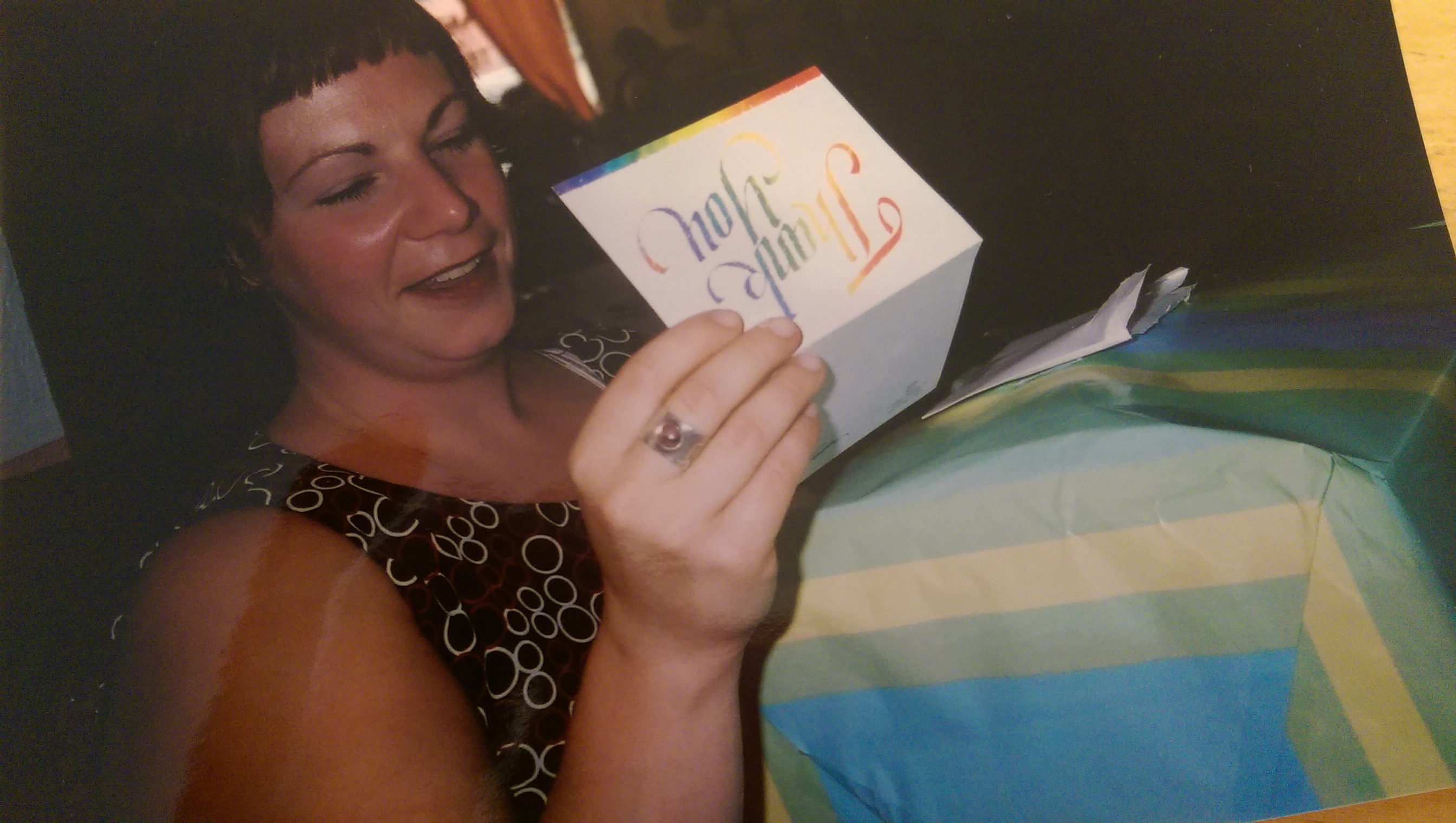
The last page of the wedding ceremony…

A couple of weeks ago, a friend of mine posed a question on Facebook, asking what she should do with her many years of journals in the course of a move.

I’d been wondering the same thing as I am moving to Madrid later this summer. My plan is to board the plane on July 28 with a one-way ticket, a one-year visa and two suitcases — but no journals.

“Burn them,” my friend Scotty wrote in response to the original question, the answer not intended for me. And yet, it was, as I intuitively knew he was right.

I had been an avid journal-er in my 20s — tucking into bed each night with a notebook and pen and chronicling the events of the day. Sometimes in prose. Occasionally poetry.  Lush, detailed descriptions of the sex I was having. Barely decipherable drunken scrawls, desperate and self-pitying.

I carried them with me for nearly 20 years — from Detroit to San Francisco to Oakland. To Chicago to Seattle and back to Chicago — about a dozen of them, most of them with hard covers.

I stopped journaling not long after my then boyfriend (now ex-husband) moved into my apartment — choosing to tuck in with him rather than a stack of pages and my most intimate thoughts.

I returned to the practice 15 years later, switching the time to first thing out of bed — Morning Pages, as suggested in the book, “The Artist’s Way.”

When I moved back to Chicago in 2012, following my divorce, I began reading my old words  — the ones I had carried with me for so long.  Juicy bits about the photographer who kept a studio above the restaurant where I worked. The aspiring rabbinical student. The actor.

The much, much older man from Detroit who suggested I meet him in Vail — “just as friends.” The lawyer and part-time musician. The doctor I met on a press trip in Germany.

I had forgotten.

It was fun at first, feeling like a voyeur, remembering who I had once been — until I considered contacting one of those men, at which time a friend suggested I take a break from my reading. And I did.

Meanwhile, I continued filling soft-covered notebooks with Morning Pages, stacking them one on top of the other on a shelf in my bedroom closet — until a few weeks ago, when I placed them in a box along with my marriage license and a copy of our wedding ceremony and drove them to Michigan, to the home of my friend Paul, the sometimes reluctant shaman.

That evening, at Paul’s suggestion,  I tore off the covers from my notebooks and ripped pages from their metal spirals. I threw a glossy journal into the wood-burning stove that heats the entire house and watched the resin-covered cardboard catch, shrivel and glow. I tossed in several more, until the oven was filled with ash. Then Paul played John Lennon’s “Starting Over” and we danced, laughing.

In the morning I brought the remaining notebooks, wedding ceremony and marriage license outside to a fire pit Paul had dug. He said a few words, inviting in the spirits, and I again began the process of burning my words — stopping occasionally to read a random page out loud before throwing the notebook into the flames — until the pit was overcome with ashes like the stove the night before.

Nearly two hours later, I wasn’t done. Paul suggested I leave the remaining notebooks with him, promising to burn them at his next sweat lodge. I agreed, and asked that we end the day’by burning my marriage license.

Several people had suggested I might need it one day, but I couldn’t imagine any reason to hold on to it. So I offered a few words of thanks to my ex and once again set him free — something I had done following the completion of our civil divorce, and again following our Jewish divorce.

The legal document crackled and hissed, engulfed in yellow and blue flames.

Since then, my ex and I have had precious little contact. And the relationship that had begun just prior to my trip to Michigan has blossomed.

Paul closed the ceremony by bringing me inside, where we sat in meditation. Then he sang and he drummed, smudged me with sage and handed me a rubber nose in a small plastic container — the kind from a bubble-gum machine that contains a prize, a ring or tattoos — and assured me if I continue to listen to my heart and to my spirit, I will always “nose” what is right for me.

Like knowing when to let go of my stories and how to do it. With fire, with friendship, and with God.
I Held On To My Own Hand

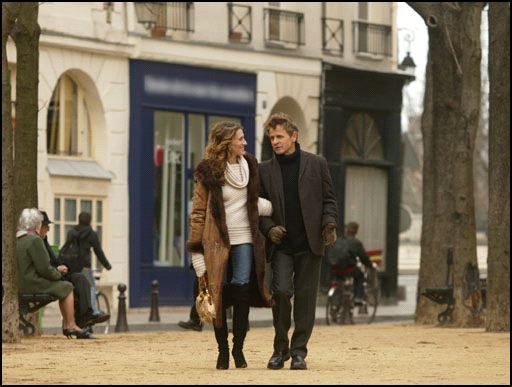
Carrie and Petrofsky -- BEFORE he let go of her hand.
Carrie and Petrofsky — BEFORE he let go of her hand.

There’s a wonderful scene in the second to last episode of Sex and the City —  where the camera zooms in and in slow motion Aleksandr Petrofsky lets go of Carrie Bradshaw’s hand, the one he had asked her for a few hours earlier in a moment of anxiety and doubt.

“Promise me you will not let go,” a nervous Petrofsky says, fiddling with his cufflinks as he dresses for his art show opening.

Carrie nods, forgoing the party held in her honor — perhaps the first and only experience of and for herself in the City of Light.

Upon entering the gallery, Petrofsky’s fear is quickly assuaged by applause. Forgetting his words, he releases Carrie’s hand, ultimately releasing her.

I am telling this story to the man lying next to me on the futon.

We are making out like teenagers. Except that I never did this when I was a teenager. It is sweet. Tender. New. My whole body is humming.

I feel his weight on top of me and suddenly feel small, pressed down, vulnerable. My body is no longer humming. In fact, I am slipping out of it. “He will move soon and do something else,” I think. “It is fine.”

But it is not fine.

There is nothing aggressive or threatening about this gesture. He is not too heavy on top of me. In fact, I crave his nearness, and yet I am triggered by it.

I don’t know why. I don’t really care. I only know that I desperately want to return to the place where my body hums.

And I intuitively know the only way back is through — through my mouth, my voice, my truth.

I ask him to move. Kindly. Gently. Assuring him he has done nothing wrong, because he hasn’t. Assuring him that this is “my stuff.”

He rolls on to his side, kisses my forehead and strokes my cheek, and asks me what I need from him.

“Nothing,” I say. And it is true. I have exactly what I need. I have myself.

And in this seemingly insignificant moment I see the hundreds of times I have told myself everything was “fine” when it was not — saying nothing. Enduring, hoping, praying something would change, but not recognizing my role in changing it. In sex. In love. In work. In friendship. In family.

I get teary with the realization that I have never advocated for myself in this way before. I tell him this and the Carrie-Petrofsky story.

“I feel like I have held on to my own hand,” I say.

A few nights later we are again lying on the futon, under the front window that faces a church.

I am wearing decidedly less clothing than I was the previous time we were together. I feel myself slipping out of my body again.

“I want my pants back on,” I blurt out.

“Too fast?” He asks. “Too fast,” I reply.

“Yes, for me too,” he says, helping me slip back into my skinny corduroys. Zipping them, I almost immediately slip back into my body — reveling in all of the sensations created by my new partner.

I think of all of the times I have had sex when I didn’t want to. Because I thought I should. Because I thought it was expected. Because I had wanted it but changed my mind and didn’t really believe I was allowed to, that I could. Turns out — I can.

“I held on to my own hand again,” I tell him, grinning.

He smiles back, his hands tracing the seams of my corduroy jeans, kissing me like the teenager I never was.

And I feel my body humming again.

Artist Date 107: As It Was Promised to Me

I have come to crave myself.

I was promised this would happen.

The first time when I left Seattle — my therapist gave me a copy of the poem “Love After Love” by Derek Walcott.

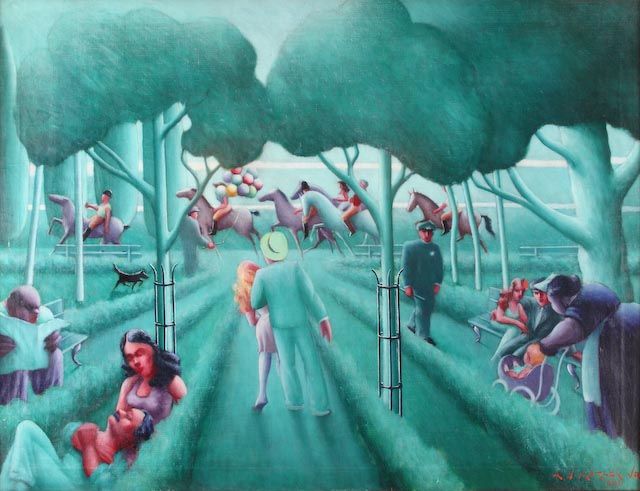
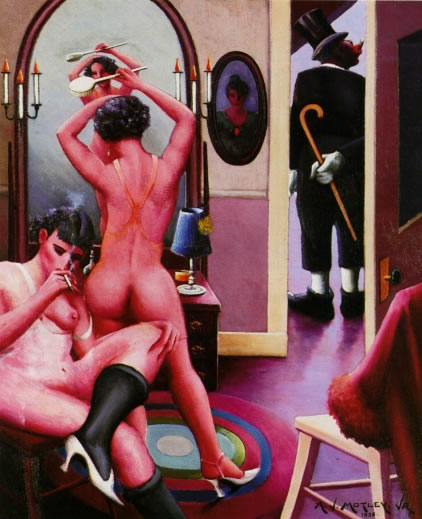
Between Acts by Archibald Motley

The time will come

when, with elation

you will greet yourself arriving

at your own door, in your own mirror,

and each will smile at the other’s welcome.


and say, sit here. Eat

You will love again the stranger who was your self.

Give wine. Give bread. Give back you heart

to itself, to the stranger who has loved you


all your life, whom you have ignored

for another, who knows you by heart.

Take down the love letter from the bookshelf,


the photographs, the desperate notes,

peel your own image from the mirror.

Sit. Feast on you life.

The second time was a few months later, when my friend Sarah sent me a text, a photograph of a page in a book and a couple of highlighted lines — I do not remember the exact language, something about “holding on to the jewel that is myself” and “no more compromises.”

Both sounded like a bunch of pretty words and glib proclamations — neither which I could relate to.

My heart was broken. I was broken. Being alone was the worst thing I could imagine, as I was sure it was an indicator of what my future looked like.

I wanted to dress my wounds with the skin of another, healing from the outside in — although I didn’t realize it at the time.

And yet, I put the Walcott poem up on my refrigerator, next to a portion of the poem “Dreams of Desire” by Oriah House…

I want to know if you can be alone

with yourself

and if you truly like the company you keep

in the empty moments.

…and next to a tiny square of paper that had fallen from one of my journals. It was old — leftover from my single days in my 20s in Detroit. I do not know the source.

Sunday in the Park by Archibald Motley

Most of us approach things exactly the wrong way around. First we want someone else to make us feel secure by lavishing us with affection and approval. But what you find out is that you are the source of love. When you have done the right inner work, you find that those black holes, those persistent needs and demands have been covering up the source of love, the boundless ocean of love within you.

It seems a higher part of me deeply understood the power of words and of seeing the same words day after day, and it believed in the ability of words to burrow into my subconscious and change me.

And so I find myself aching to be alone and responding with what Twyla Tharp calls “the creative habit” — the Artist Date, number 107.

It is unplanned.

I see posters for the show “Archibald Motley: Jazz Age Modernist” on my way into work and decide to go. I mention this, throwing in the words “Artist Date,” to my colleague Nancy.

“Oh that’s right…you have a date tonight,” she says, not quite hearing or grasping what I have said.

It is true, I do have a date tonight — the first in many, many months. But first I have a date with myself, I explain.

I bound up the stairs of the Chicago Cultural Center as if to meet a lover. Instead, I meet myself along with the paintings that have called me here.

They are vibrant, sensual, humorous — each telling a story that can only be told by one who has lived it.

Gazing in silence, the chatter of my mind clears. I can hear my breath, my heart. I can feel the cool of lush trees and grass and even a man’s suit — painted an Easter green in “Sunday in the Park.” I can feel the heat of pink bodies — all breasts and asses, high heels and cigarettes (Delightful!) in “Between Acts.”

I can feel my own body soften and fill with a sense of contentedness that comes with giving myself what I need most — in this moment it is time, attention, quiet, a sense of normalcy.

Perhaps this is why I take an Artist Date today — before a more traditional one– so that I might fill myself with these things and not mistakenly ask another to, so that I might have a chance to greet myself at my own door and feast.

Artist Date 106: Altered But Recognizable

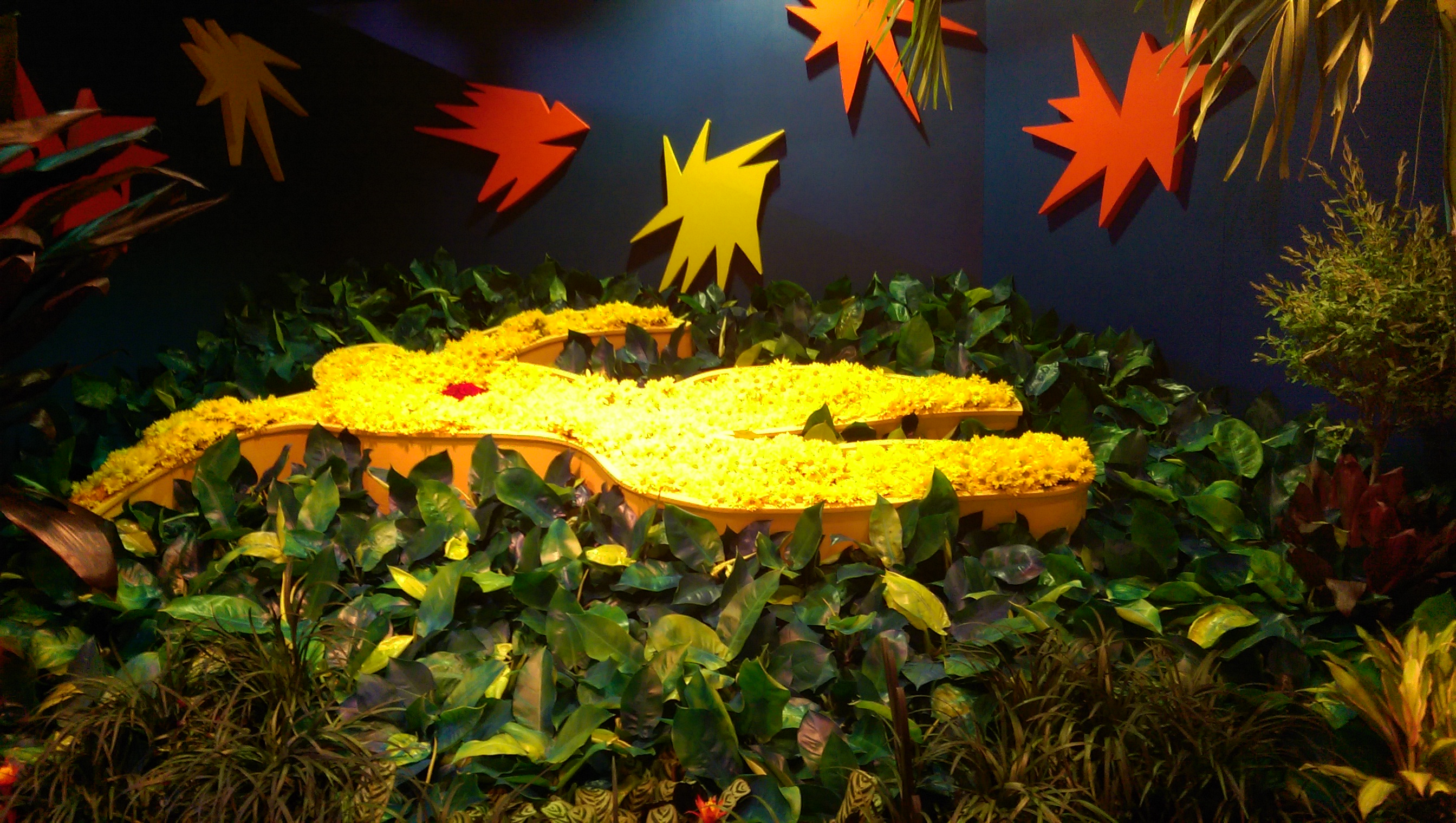
From the 2015 Chicago Macy's Flower Show "Art in Bloom."
An ode to Henri Matisse. From the 2015 Chicago Macy’s Flower Show “Art in Bloom.”

My friend Matt recently asked if I was still “doing the Artist Date thing.”

I am somewhat taken aback. It reminds me of being asked if I am still dating Insert-Man-Here — an inquiry often made when I have ceased to talk about a man du jour. It is the cousin question to, “Have you heard from Insert-Man-Here?”

The answer to both is usually, no. If I were, if I had, I would have mentioned it.

But Matt isn’t asking about a man. He is asking about my commitment to myself and to my craft. I wonder if I have ceased to talk about it, to be engaged with it, or if he has just not read about it lately.

The whole exchange scratches at the part of me that knows I haven’t been as committed to the practice as it is prescribed by Julia Cameron in “The Artist’s Way” as I once was. The part that bristles at my skipping weeks, writing about them much later and occasionally allowing others to join on my intended solo sojourns — my imperfection.

I do not mention any of this. Instead, I sy, “Yes,” and add that I have just completed two years of Artist Dates.

A week later, I have not been on another.

I tell myself I’ve been busy with the seemingly incongruent actions of preparing to leave the country for a year and trying to secure additional work while I am here. Drafting resumes, taking software tests and going on interviews; ordering background checks and searching for best prices on airline tickets.

On the eighth day following Matt’s original inquiry, the universe sends a second messenger — this one, a bit more direct. Dorothy attends one of the Thursday Weight Watchers meetings I lead. She is in her 70s and is the kind of woman I hope to become — active, engaged in the world, growing, learning, giving back.

She asks if I have been to the Annual Flower Show at Macy’s.

I have not.

Dorothy sees this as an invitation to make an invitation. She tells me about the show, its theme — Art in Bloom — and how she, a master gardener, and others have breathed life into it.

When she is done, I commit to it, to her, to myself and to my process. I arrive on the 9th floor of the Macy’s flagship store on State Street a few hours later, Artist Date 106.

I smell the exhibit before I can see it. It is moist, warm, green — like the Lincoln Park conservatory where I have spent many Chicago winter days warming myself. I do not expect it.

Flowers are planted into shapes like Matisse cut-outs. Whimsical. Vibrant. I think of the cracked frame holding a Matisse print in the living room of my Mission-neighborhood apartment. Of my then boyfriend sitting on a Pilates ball, losing balance, and rolling into the wall —  knocking the print off of it.

2015-04-02 14.47.29
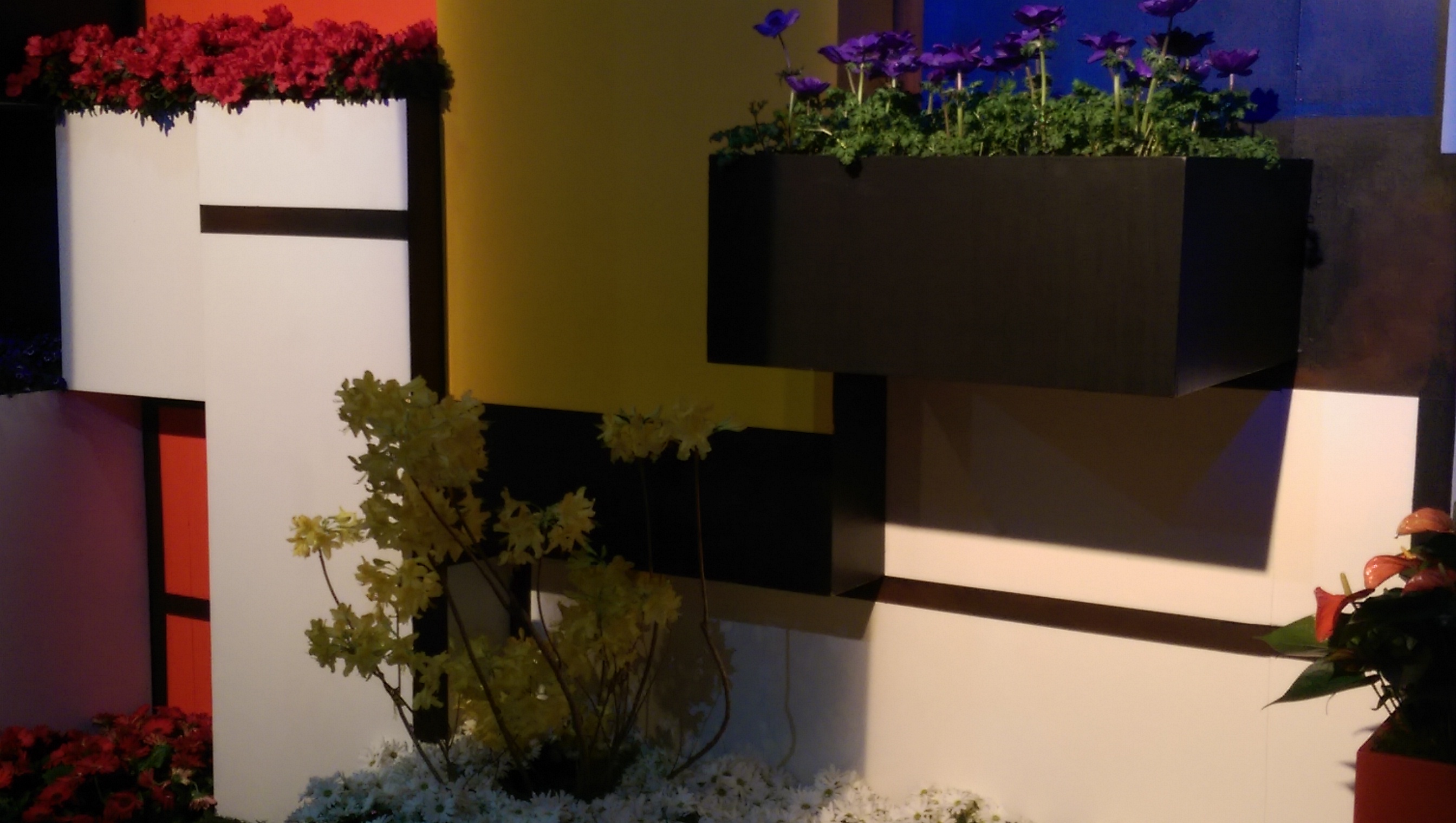
Ode to Piet Mondrian. From the 2015 Chicago Macy’s Flower Show, “Art in Bloom.”

Grid flower boxes in primary colors with thick black lines are an ode to Piet Mondrian. I recall the Mondrian show at the Metropolitan Museum of Art in New York many, many years ago — entering the fashioned artist’s studio and swing dancing inside of it with my friend Jason.

I remember my friend Teresa’s mother taking me to the Macy’s Flower Show in San Francisco — on our way to her daughter’s theater performance. She went every year. It was her tradition. Returning to it in Chicago nearly 20 years later, the show becomes a chapter in mine.

I peer through a doorway on my way out — classic paintings are being projected onto a wall of white flowers. Michelangelo’s Mona Lisa. Boticelli’s The Birth of Venus. Raphael’s Sistine Madonnas.

I wonder what my own life might look like projected onto a wall of white flowers.

Fragrant. Lush. Harsh edges softened. Altered but recognizable, I think.

A lot like it already is.

2015-04-02 14.50.11
Raphael’s Sistine Madonnas. From the 2015 Chicago Macy’s Flower Show, “Art in Bloom.”

Artist Date 105: Te Recuerdo!

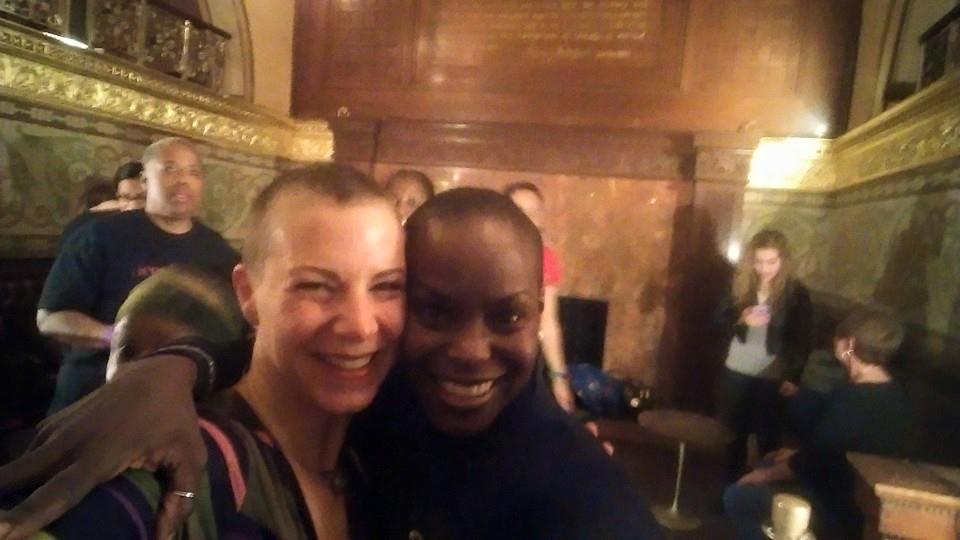
With Hope Boykin, Alvin Ailey dancer, at a pre-performane workshop at the Auditorium Theater.

“I remember you.”

I smile and rub my hand over my mostly naked head. “It must be the hair.”

“No,” she insists. “I remember you. You were here last year. You are here a lot.”

Here is the Auditorium Theater to see Alvin Ailey American Dance Theater. Here is the pre-performance mini-workshop with company dancer Hope Boykin.

Here is Artist Date 105 — marking the beginning of a third year of solo sojourns, as suggested by Julia Cameron in “The Artist’s Way.” I had not planned to take on this commitment for another year, and yet I am here…counting numbers, filling my creative coffers, following my feet. The Artist Date has become what Twyla Tharp calls “the creative habit.”

I was here opening night of the run, a little more than a week ago, with my friend Julie — my brain cueing each next movement of Revelations, my body responding, leaning into the gesture while my mind completes it. I was here last year and the year before that — each time learning bits of Revelations at the mini-workshop before the show.

I was here with Martha counting the ribs of the dancers from row I — the seats, a gift from my friend Amy. I was here with Rebecca, giddy when an usher moved us from balcony to orchestra, spoiling me for all future dance performances.

And I was here alone, on other Artist Dates.

So it shouldn’t surprise me that the woman checking my name off the list might remember seeing me. Or that Kristen from the Auditorium Theater Marketing Department does too.

She is standing in front of a board covered with sticky notes and pins, each naming a patron’s “favorite Alvin Ailey memory.”

I take a Sharpie marker and add mine — dancing with Kristen at a master class led by another Ailey dancer — Antonio Douthit-Boyd. It was there I learned the definition of “intermediate” is fluid at best, and that I can be the least trained, least experienced member of a class, but that I still have a right to be there.

But I am surprised when a woman approaches Kristen and me and blurts out, “You go to my synagogue.” It feels completely out of context. It is. And she is right, I do. Although not much lately.

I think about these moments driving home. How the once daunting, seemingly exclusive world of performance seems cozy and familiar. How Chicago feels like a big, small town. And how I feel a part of both.

Making my way up Lakeshore Dive, I am flanked by twinkling skyscrapers to my left and Lake Michigan to my right. For a moment I wonder if I really want to give this up and move to Madrid.

I do.

I know just because a place feels like “Cheers” (“Where everyone knows your name.”) is not reason enough to stay. I learned that when I left Detroit and built a life in San Francisco. Again when I left that life in San Francisco and made a place for myself in Chicago. And a third time when I left that place for myself in Chicago and, as my friend Joanne likes to say, “broke the Seattle chill.”

In less than six months I will reduce my belongings to a few boxes that I will ship to my mother — mostly paperwork, plus a few keepsakes I’m not yet ready to part with — and two suitcases which will accompany me to Spain for one year, possibly, hopefully longer.

I am looking forward to going. To filling my brain with another language and culture, and my body with jamon and cafe con leche. To expanding my circle and creating one more home for myself.

I am looking forward to seeing Alvin Ailey perform on the other side of the Atlantic Ocean. To perhaps dancing with Hope or Antonio again. To hearing, “Te’ recuerdo!” (“I remember you!”) And being a little surprised by it.

I Need A New Before

Possible new BEFORE photo.

I’ve had the same Weight Watchers “Before” photo for nearly 12 years.

It is of me and my ex-husband, drinking wine at an outdoor cafe in the Fifth Arrondissement in Paris — the day after my 31st birthday.

My friend Nora calls it the perfect before photo, pointing to the visible roll at my belly, the buttons straining at my pre-reduction breasts, gaping fabric, and my somewhat distorted face.

I share this photograph with new Weight Watchers members as a way of creating rapport and earning credibility — as if to say “I’ve been there…I know” and also,  “this is possible” without uttering a word.

Some gasp. Others laugh uncomfortably. A few offer up kind words like, “You were still cute.” Occasionally I am asked, somewhat rhetorically, “This is you?” to which I reply “the other is my ex husband,” and sometimes add, “it is his ‘before’ photograph too.”

Last week I heard something different, something I hadn’t heard before — twice, from two different people.

“Are you still with him?”

I was taken aback. It seemed out of context, but also surprising, as for so many years, so many of the members knew him — or at least of him.

He was the one pushing the basket at Trader Joes. The bike racer turned massage therapist turned doctor who helped guide this girl who failed gym class into a reluctant athlete who dabbles in bike centuries and triathalons. The one who asked if I earned more activity points in the winter, as I surely burned more calories trying to keep warm. The reason I left California and then Chicago — choosing to flank him on his journey from medical school to residency to doctor.

But I rarely, if ever, mention him in Weight Watchers meetings anymore.

Thursday, after my lunchtime meetings closed, I shared the twice-asked, seemingly unusual question — “are you still with him?” — with my colleagues and added, “I think I need a new ‘before’ picture.”

They agreed.

Another possible BEFORE.

It feels like more than a gentle nudge from the universe telling me to “move on” — to find another 35-pounds-heavier reminder of who I used to be, because offering up a photograph of the two of us more than half a dozen times each week is no longer serving me.

And so I wonder what else I might be doing that doesn’t contribute to my “moving on.”

There isn’t much of our past surrounding me — I left most of it with him in Seattle. A cooking pot, French coffee press and a three-season sleeping bag. My Italian road bike, a pair of snowshoes and a lithograph by an African artist called “Masks of the Healer #2.” It hangs over my dining room table, a sort of talisman watching me as I write.

I also removed him from my feed on Facebook after being “greeted” by a photograph of him, his girlfriend and his new cats on Christmas Day. It wasn’t the image of him and another woman that bothered me so much (I’d seen photographs of the two of them before.) It was the juxtaposition of him in his new life, wearing his old bathrobe — a plaid flannel, L.L Bean — that got to me.

And yet, I was still typing part of his name and social security number several times each week — using the combination as a secondary password. So yesterday at work, I changed it to something more me-centric.

But finding the right before picture is more challenging. We were together for 15 years, so he is in many of my photographs. (My mother’s too. She cut him out of the one on top of her bureau.) Also, I didn’t keep many photographs of me 35 pounds ago. I had ceased to be that woman.

And I’ve ceased to be that married one as well.

There are other befores. And there will be other afters.

Artist Date 104: When Too Much is Just Enough

From the show that brought me back to a darker time in my body's journey. Photography: Jack Wallace. Graphic Design: Rebecca Willett
From the show that brought me back to a darker time in my body’s journey. Photography: Jack Wallace. Graphic Design: Rebecca Willett

I can’t remember the last time I vomited. I don’t try to. Such a violent act — my insides coming out. My body’s intuitive wisdom, ridding itself of what it identifies as clearly foreign. An organic process.

It is hard to imagine I would ever try to bring this on. But I did.

A long time ago. And thankfully, not for very long — I wasn’t very good at it.

I haven’t thought about this in more years than I can remember. Probably because I haven’t binged in at least that long.

But I am brought back to it here, in the darkened Greenhouse Theater for Danielle Pinnock’s showcase performance of Body Courage — Artist Date 104.

In these 75 or so minutes, Pinnock is the embodiment of her more than 400 interviews, her words verbatim.

She is man and woman. Black and white. Straight and gay. Young and old.

She is a former Miss California USA pageant contestant sporting a red bathing suit, gold high heels, a long blonde wig and Valley Girl twang.

She is an Irish priest with early-onset Parkinson’s Disease. A Muslim woman touching her thighs over and again — the site of her burn scars, scalded by her ex with the contents of a crock pot.

She is Tan Mom, whose 15-minutes of fame I missed somehow, and a Temple University professor who also missed her arrival on to the American pop-culture scene.

She is a gay man with gynecomastia — overdeveloped male breasts —  the one who keeps his shirt on during sex.

She is a 20-something waitress who vomits.

My ears perk up when the waitress mentions “the trick” — puke immediately after eating, before any food has begun its journey towards digestion.

How could I not have known this? It is so obvious. And yet, my flirtation with this brand of disordered eating was pre-Internet, before Google was a verb and I could type “How to vomit” into the search bar.

Unfortunately, I never needed any special instructions regarding bingeing. It was easy. Intuitive.

The black-out tornado roaring through my kitchen — stuffing bite after bite into my mouth, not fully finishing the last before starting the next.  No mere episode of overeating, emotional eating, or eating when I am not hungry — although all of these factors may be at play.

The binge is a high. A distraction. Numbing.

And it is shameful. A secret. Dissociating.

It is me at my friend Carlos’ house, dog sitting — on the kitchen floor eating Girl Scout Thin Mints by the sleeve and peanut M&Ms from a cut-crystal jar.

He returns, unexpected. My mouth is full, my hand loaded for the next bite. We look at one another and say nothing about it — now or ever again.

It is me lying on the bed in my underwear and nothing else, trying to bargain away the hurt — both physical and emotional. Trying to pray away the remorse.

It is me walking down the hill to one market for yogurt-covered raisins, up it to another for Pepperidge Farm cookies, and next door to a third for a pint of Ben and Jerry’s — too ashamed to buy all of this at once.

It is me successfully unloading my body of macaroni and cheese from the cafeteria before my afternoon lecture. I look in the mirror. The blood vessels around my eyes are purple and broken. I fear people will notice, will know what I have done.

It’s been nearly 20 years since my last binge. I don’t remember it. What I ate. If I vomited. Or how I stopped.

I only know that it stopped “working” — no longer providing the desired effect of distraction, and if I was lucky, oblivion.  That the pain of my behavior — both physical and emotional — became too great to continue. And that I no longer do it.

A miracle is defined as “a highly improbable or extraordinary event, development, or accomplishment that brings very welcome consequences.” This is surely one.

However, I still overeat — sometimes. I still emotionally eat and eat when I am not hungry — sometimes. And I likely always will — sometimes.

Sliced pork on focaccia, oil seeps through the waxy paper, while I sit on the edge of a fountain in Campo de’ Fiore. My body says “enough” at two-thirds, but I continue — uncertain when I will be here again.

The last few bites of a burrito from my favorite taqueria — not enough to bring home.

Fresh dates in my refrigerator — nature’s crack. I have two, then two more, and then another two.

The dinner plate I push away — done — and then pull back and return to as my friend broaches the topic we have neatly avoided all night.

The difference? My intent. My response. My awareness.

I remember these moments. Some, like the porchetta in Rome, are joyous.  Others, like the reminder of my “still single” status over dinner, more than uncomfortable. But mostly they are neutral, evoking neither shame nor pain, just information — a physical sensation of “too much.”

And the comfort in knowing it, and in knowing that sometimes “too much” is “just enough.”

Surprise! You’re Divorced!

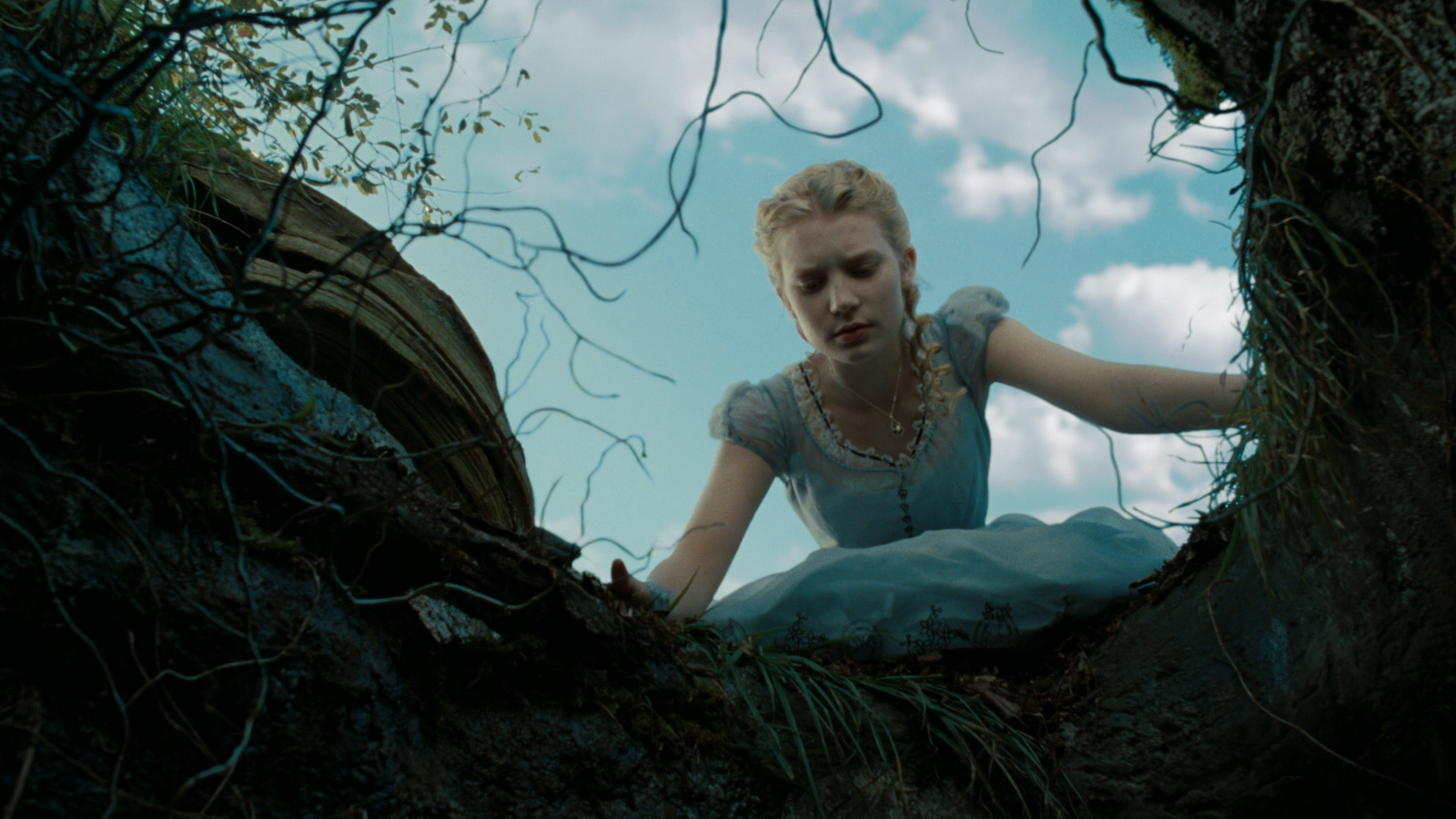
From Tim Burton's 2010 Alice In Wonderland.
Considering the other side of the rabbit hole. From Tim Burton’s 2010 Alice in Wonderland.

I haven’t heard from my ex in more than a week.  This isn’t unusual, except I have reached out to him twice during this time — once to ask for medical advice (I forget he is not my doctor), a second time to ask if he might talk with a friend of mine about the later-in-life path to medical school — and that is unusual.

Except for when it isn’t.

We recently saw one other for the first time since I moved out of the house we shared in Seattle and returned to Chicago, more than two and a half years.

I cried when I saw his blue polar fleece stocking cap — the one that makes him look like a tall Smurf– bobbing above the crowd as he got off the train, across from our favorite Lebanese restaurant.  Again when we embraced.  And again when, looking up for the menu, I inquired “The usual?” to which he replied, laughing, “That is what I was going to say.”

And so it was over chicken schwarma, hummus and fattoush that he admitted that the times he hadn’t called me back — there weren’t many — he simply, emotionally, could not.

This may be one of those times.

At first, I didn’t think too much of it when I didn’t hear back from him.  It was Valentine’s Day weekend.  I thought, perhaps, he might be out of town with his girlfriend.  A thought followed by strong intuition — “He’s moving in with her.”  I said the words out loud, as usual, to no one in particular.  “He doesn’t want to tell me.”

Later that day, I saw an MLS listing for a bungalow on his Facebook page, forwarded by his girlfriend.

When I reached out to him a second time, a week later, and again did not hear back, I was fairly certain of my inner knowing.  And much to my surprise, I felt rattled and sad.

Not so much because he may or may not be buying a house with his girlfriend. (I still do not know for certain, nor is it really any of my business.)  But because, in that moment, I realized I had been holding on to an unspoken agreement we never made.  Something like, “We may be divorced but you and I are in this together.  Forever.”

I was shocked.  I had no idea.

I have often referred to mine as the “lucky divorce.”  (Which sounds like it should come with soup, egg roll and an almond cookie.)

For a long time we were one another’s “In Case of Emergency” person.  We left passwords unchanged, and nursed each other’s broken hearts in post-divorce attempts at romance.

I never had to hunt down my spousal support.  I knew the money would be in my account on the 15th of the month, the same way I knew he would always be there.  Until he wasn’t.

Perhaps my divorce wasn’t so “lucky” after all, as it seems more than possible that this underlying, unspoken (not even to myself) agreement may have kept me from truly seeking out another partnership, or at the very least, being open to one.

I shared all of this with my friend Robin.  She replied, “He’s not your husband anymore.”

Not exactly news.  And yet, on some deep, gut, primal level — it was.  And I finally “got it.”  So perhaps I can finally let go of it.

It reminds me of when I returned to an old boyfriend, many years after we had broken up, to make amends for where I had been wrong in that relationship.

“You wanted a partner, I wanted a parent,” I said.  (Not surprisingly, he was 17 years my senior.)  Tears streamed down his face as the words slipped past my lips.  He hugged me hard, harder than he ever had in the time we were together.

“Why are you crying,” I asked.

“Because I am.”

I nodded.

I understood.  I saw the truth.  I saw what he knew all along.  Finally.  It was as if I had slipped back through the rabbit hole and we were living in the same reality, more than 15 years after the end of our brief relationship.

At least this time it only took three years.

Artist Date 103: Oh The Places You’ll Go

Backstage at the Museum of Contemporary Art

I don’t want to go.  I never want to go.

Artist Date “Dirty Little Secret” — I almost never want to go.  The same way I never want to get on a plane to somewhere I’ve never been before.

I do when I book the flight or when I make the reservation for a performance or workshop.  But when the actual time comes, I feel anxious and sick inside.

Like the first time I went to Europe.  The German Consulate in San Francisco sent me.  Lufthansa Business Class.  Four and five-star hotels in Bonn, Berlin and Dresden.  (Or as luxury as was available in Dresden in 1995.)  Access to end of World War II commemoration events where I spied Helmut Kohl, Al Gore and Francois Mitterand.

But I am at the airport in San Francisco, talking with my friend Peg from a payphone — in tears.

Ten years later I am on my way to France, by myself.  This time it is my husband and a cell phone.

And to Italy this past fall.  From Chicago O’Hare.  I call my girlfriends in quick succession.  Ann, Julie, Lynn, Chase.  No tears this time.  Just an overwhelming sense of dread.

Each time, I am anxious with uncertainty.  Anxious, that I don’t speak the language — German, French, Italian — that I won’t understand.  That I will feel foolish.  That I will fail.

My fears are not baseless.  Each time I depart the plane, I don’t speak the language — not fluently.  Just a little French.  A little Italian, leaning heavily on my high-school Spanish.  And German, none at all.

I often don’t understand.  And I sometimes feel foolish.  But I never fail.  Mostly because it is impossible to fail at traveling.  Unless one fails to get on the plane.

It is the same walking into the Museum of Contemporary Art for a flamenco workshop — Artist Date 103.

I am anxious as I don’t know the genre.  I do not know what to shoes to wear (if any), what clothing.  Afraid that I will feel foolish.  That I will fail.

I think back to the master class I joined with a principal dancer from Alvin Ailey American Dance Theater.  The workshop was described as intermediate.  I had been dancing for six years — once a week at the Old Town School of Music.  But the others had been dancing all of their lives.  It was my Flashdance moment — sans rolling on desks in front of an admissions board — I was out of my league.

I did feel foolish.  At best, I got one-third of it.  But I didn’t fail…because I got on the plane, as it were.

And I lived a fantasy I never imagined I really would or could — to dance with Alvin Ailey company members.

I remember this and call the MCA to inquire about attire.  I do not receive a phone call back.  I pack a pair of hard shoes with wooden heels, a sports bra, yoga pants and too-big jeans and go.

When I arrive the program manager takes me into the theater, through the side doors and into Dressing Room B.  “You can change in here,” she says.

I ask her what she thinks would be best — yoga pants or jeans.  Either will work, she replies.

It doesn’t matter.  I don’t care anymore.

I could leave now and be “good.”

I am in the dressing room at the MCA.  The same dressing room Mikhail Baryshnikov *might* have used when he performed here last year.  (There *is* a Dressing Room A.  And there may be more — C, D.)

I am giddy.

I feel like an imposter.  I take a photograph of myself, change into my yoga pants and go out to the stage.  (The same stage where Baryshnikov performed.  The same stage where Sonia Sanchez will perform tonight.)

I can't believe where I'm at...
I can’t believe where I’m at…

I could have worn jeans as it is not a workout, per se.

We do unwinding exercises and learn the foot pattern that matches the Flamenco rhythm.  (One. Two. Three-two, three, four.  Four-two, three, four.  Five.)  We create improvisational pieces with partners that we perform.

Some of the women have been dancing flamenco for years.  They wear Gypsy-style skirts and black, heeled dance shoes.  Others have never danced a day in their lives.  They are dressed for a winter’s day in Chicago.

And Sonia, she doesn’t speak English so much.  And I really don’t speak Spanish.  But I understand… enough.

Enough to be reminded that I really can’t fail if I show up.  And that when I do, I get access to places I could never go on my own — into dressing rooms, onto stages, into my fear.