Out on a morning walk, I wander into the native planting section of Winnemac Park. There are wood chips on the ground, soft landing for my feet. A low wooden fence.
I’ve been here before. But it’s been a few weeks. Months. I’m not sure. I lose track of time.
Today the planting is as tall as my head. Taller. Green stalks, some with yellow flowers and brown centers. Purple flowers and greenish centers. What we used to call Queen Anne Lace when I was a child. I have to push my way through it, clearing the way for my next step. Jungle-like.
I am smiling.
I walk through it again on my way back home, as the morning grows hot and humid. This time I pull out my ear buds. Right after Labelle’s Lady Marmalade.
It is so quiet. Right here in the city. I hear the birds. The dogs. The cars passing by on the perimeter merely a hushed vibration. It immediately feels different.
I don’t know why I’m surprised.
My ex always had music playing. And while I love it, I often found it overwhelming. I craved the quiet.
And yet, now living on my own, music is very much a part of my background. Perhaps the quiet frightens me now, alone with my thoughts.
But now it feels like a respite. A great, big exhale. As if I am on an entirely different walk. As if the walk just moments before had never been. The change is palpable.
I look to a weeping willow and think, “I need to come here every day. Even just for 10 minutes. To walk on the wood chips. To get lost in this “forest” of native planting.”
Ah. That still small voice. I couldn’t hear it over the Donna Summer Pandora Channel (which, by the way, is excellent for walking…except when you are trying to hear that still small voice.)
I greet a big, black lab on the path. He is off-leash. I am afraid for a moment. I peer around the corner looking for his owner. “Is he friendly?” I ask. He is.
His owner had been lost in his own world –his nose tucked into one of the tall purple daisy-like flowers.
I feel a tinge of sadness leaving. I always want more.
Walking home I admire the beautiful teak wood furniture on the porch of a brownstone. Its pads noticeably missing. The greenish brass elephants flanking it.
Wooden flower boxes hang off the window of a multi-unit brick building. The only ones – obviously installed by the tenant. His joy. Her contribution to the neighborhood.
Tiny gardens are planted in the small open spaces outside of single-family homes and brown-stone three-flats. Shady spaces, lush with green leaves and plantings, moist rocks and black earth. A burgundy Japanese maple.
I smile, sort of wistfully, at the sad attempt at yarn bombing on the trees outside of the church across the street.
Arriving home, my mind is noticeably still. I could hear Pandora playing in my bag, I had forgotten to turn it off – The Weather Girls, “It’s Raining Men.” Miracle. I hadn’t been thinking of them at all.
Last week Stephanie W. invited me on an Artist Date. This week Stephanie G. did.
However, unlike Stephanie W., who offered a suggestion – one that allowed me the prescribed solo experience of an Artist Date – Stephanie G invited me to join her and our mutual friend, Hallie, at the theatre. Not solo. Technically, not an Artist Date.
Yes, I spend this sort of time splitting these sorts of hairs. As if the Artist Date police might show up at my door. So I was relieved to read the following in Julia Cameron’s Walking in the World – her follow-up to The Artist’s Way, where I first became acquainted with the Artist Date.
In the section titled “Basic Tools,” Cameron writes:
“…the Artist’s Date…is assigned play…
“Synchronicity – that uncanny knack of being in the right place at the right time – picks up markedly as we practice Artist’s Dates.”
Stephanie’s invitation to The Royal George Theatre for The Pianist of Willesden Lane – Artist Date 31 –felt like that, like play, like synchronicity.
I’ve been thinking about music a lot lately. My coffers crying out for sound.
I considered Harry Connick, Jr. at the Chicago Symphony. Tickets were pricey unless I wanted to sit in the rafters. Which I didn’t. I wanted to see him. Easy on the eyes, as my friend Teresa used to say. Sitting in the gallery section would only frustrate me.
I considered a free concert at Millenium Park. I considered a trip to the record store.
Yet I found myself in a woefully off-center, red-velvet theatre seat, flanked by Hallie on my right, and a mercifully empty seat on my left. A Steinway Grand (Baby Grand? Concert Grand?) and a handful of oversized frame mirrors on stage in front of me.
The Pianist of Willesden Lane is the story of Lisa Jura. How her commitment and passion for the piano, along with the “kindness of strangers” and some sort of higher power – call it synchronicity – saved her life during World War II. Written and performed solo by Jura’s daughter, Mona Golabek, The Pianist of Willesden Lane is told both in words and music.
Bach. Beethoven. Rachmaninoff.
Debussy.
I feel fingertips on my body.
I am lying in bed with the former symphony conductor. He is playing the notes on my naked body – silky strains that sound like watercolor. Ridiculously sexy. He is teaching me about music. Telling me about his life. Interlochen. Tanglewood. Studying with Leonard Bernstein.
I have been assigned to write the obituary for his father – a kind-hearted, heavy-hitter in the community. We speak over the phone. He is funny, wry. Smart and sweet. I find a photograph of him in the files. He has dark hair and a beard, bright eyes and a kind smile. He is wearing a tuxedo. I am smitten.
We meet through a series of synchronicities, and spend the next couple of weeks in bed – with Debussy, and frequently a pint of Ben and Jerry’s Mint Oreo Cookie. I fancy myself “Mrs. Former Conductor.” And then it is over.
I haven’t thought about him for a long time. But my body remembers.
Like the Holocaust survivor I interviewed. She lost her sense of smell during the war. She regained it more than 40 years later when she returned to Germany. She smelled manure. Her body remembered.
I’ve been thinking of her ever since I saw Brighton Beach Memoirs a few weeks ago with my friend Michelle. I told her how I had the great, good fortune to interview and tell the stories of so many Holocaust survivors when I worked for the Jewish Bulletin.
I don’t hear their stories much anymore. Most of them are gone. Until now.
Lisa Jura arrives in London from Vienna – one of thousands of children on the Kindertransport. She is 14.
A few years later she is a student at the Royal London School of Music. In the evening she plays piano in a hotel bar, where she meets many admirers. Among them a Royal Air Force commander.
He is shy. His English is poor. His comrades approach her with a rose and act as his translator.
He says she is the most beautiful woman he has ever seen. That she must tell him when she makes her debut. And then he is gone. Not just from the bar, but from London. To war.
Lisa Jura and the Royal Air Force Commander.
And then it is over. The war. Just like that.
Miraculously, the commander is at her debut. So are her two sisters. They too have survived.
The lights go up. Golabek steps out of Jura, and back into herself. Post Script. Lisa Jura immigrated to the United States. The commander followed her, married her. He is Golabek’s father.
I get teary. Really teary.
I want to believe in ridiculously romantic love. The kind I shared with the conductor. The kind I had a glimpse of when a certain southern gentleman, upon learning I could not possibly see him again, pulled me close to him and said, “I’ll come find you.”
I want to believe in a God that allows three Jewish sisters to survive the Holocaust and then somehow find one another in post-war London. Who then places two of them across the street from one another in Los Angeles.
I want to believe in Go(o)dness. The go(o)dness of people who care for children that are not their own. Who feed them. Clothe them. Shelter them. Love them. Foster their talent and dreams while a war wages outside their window.
I want to believe in the God of Synchronicity. And I do.
I believe in “following the breadcrumbs.” Like Hansel and Gretl, noting the obvious signs and trusting that I will always be led – if I listen.
I was on the fence about my destination for this week’s Artist Date – Number 25. My friend Kiki mentioned she might drop by a reception at Lillstreet Art Center – one of my considerations. Her noncommittal musing was just enough to point my compass.
I’ve been to Lillstreet just once before, for a fundraiser. I imagined I would return here often, but I have not. I pass it all the time and I think about going in. I pour over the website trying to decide which class to sign up for. I am intimidated and ultimately do nothing.
This is ironic as I am greeted by a most friendly staffer at the door. She tells me the photography show opening today, Midwest Contemporary, is on two floors. That beer is on the main floor, wine is on the second – in case that helps guide my decision in terms of where to begin. It doesn’t.
But the pottery does. Porcelain slab platters etched with lines that look like a teenage girl’s cutting. Bowls and plates covered with repeating whimsical patterns. Forks and knives, swings, balloons and birds in matte glaze.
I’ve considered the First-Time Potter class here but have been leaning toward Drawing-into-Painting. Pottery is messy and I don’t really have “pottery clothes.” I can draw anywhere. Yet I keep picking up the fired clay. Running my fingers over it. Cupping it in my hand.
I remember ceramics class in high school. Mr. B and I argued about everything – even about how often I peed. He said I was a sloppy student. That I didn’t clean my edges, my insides. It sounds true – of my work. Of my blurry boundaries and the messy parts inside of me.
I did craft beautiful pieces in his class though. A platter with a teal drip glaze. A coil vase with a long neck – large and genie-like, big enough for Barbara Eden to pop out of. My mother displays both of them in her home.
I look up toward the photography on the wall – my chosen medium in college until I switched my major from fine art to journalism. There is a large, creepy photograph of a doll’s head – battered and old. I don’t like it. I read the artist’s statement. She photographs vintage dolls. The cracks in their exteriors representing the broken parts in us all – some that might never be “fixed” in this lifetime. I still don’t like the picture, or the doll’s eyes. But I like the idea of it.
There is work from an artist who earned his MFA from Michigan State University – my alma mater. It wasn’t known for its art department when I was a student. I wonder how it has changed.
There is another of a trailer park along the Russian River in California with a big Paul Bunyan figure looming over the camp. It is part of a series chronicling the photographer’s vacation destinations as a child. I’m pretty sure I’ve been here.
I wander up to the second floor. There is a second photograph of trailers, this one from Williston, North Dakota. Hydraulic fracking boom town. Michael and I drove through here on our way back to Chicago from Seattle. It reeked of testosterone and crystal meth. Unsettling.
There is a photograph of a young African-American man looking straight into the lens. Into me. The photographer is from Saginaw, Michigan – where my mother grew up.
“Elliot,” by Sarah-Marie Land
I feel alone. I go downstairs , returning to the pottery, and strike up a conversation with another woman, also alone. She likes the bowls and goblets adorned with animals. Anything with animals, she says. I do not, but say nothing. As the room fills up I am acutely aware of my single-ness. I think about staying and listening to the live music, but I’m not sure where to perch myself.
I decide to leave instead.
This is the first time my Artist Date feels lonely, that I don’t feel filled up by it. On the way out I stop and talk briefly with the friendly staffer who greeted me. I remember Kiki mentioning her friend’s reception is private, on the roof – that I would have to ask to get up there. So I do.
I am directed to the back of the building, through the music and pottery and photography, through double doors. I ask a tall man/boy with a red beard and glasses if this is the way to the roof. He says yes and we climb the stairs together. Two of mine for every one of his.
It is sunny and clear. People are drinking wine. I do not see my friend. I turn to go back down. The bearded man/boy says, “Yep. A lot of roof.” We walk down together. I am not sure why he has come here. I ask him if he has a studio here. He does not. He peels off to a classroom on the third floor and I go down to two. There are open artist studios. I missed them my first time up.
I walk into one. There are slabs of clay with what looks like hieroglyphics on them. The artist is talking with a couple about her work and they rope me into conversation. I ask about the tall, smooth pieces with wild insides. They are wide. Almost as big around as I, and climbing higher than my waist.
Each represents a character from Shakespeare’s “The Winter’s Tale.” The blue queen is smooth outside, but inside “she is mourning.” I see it. I see the glazed clay crying inside, rounded discs turned down upon themselves like leaves. I wonder if this is what I look like inside.
A second character is smooth and orange-y outside, fiery and sharp inside. She is angered by how the king has treated the mourning queen. A third is green. A girl child left in the woods, raised by a shepherd. She is smooth inside as well as out. Peaceful.
I return to a jewelry studio I couldn’t make my way into before. Too small. Too many people. Edith Robertson is talking with a friend. She has a blonde-ish/white-ish bob and turquoise eye liner. She immediately greets me, inviting me to try on whatever I like. She puts her hand on my arm. Warm.
I pick up a choker made of gathered strands of thin wire with a long crystal hanging from it. It looks like a stalactite. Or is it a stalagmite? A piece of lapis lazuli adorns the back side – a hidden surprise.
I think of my friend Julie and the days I spent with her after her mother died, offering massage and bodywork to her family. Of her friend Karen whisking me off to her house, plopping me into an overstuffed chair and placing a crystal in each hand.
The effect was immediate. Electric. Like a volt of energy seizing my body. I imagined smoke coming off of me, as if I had fried a chip. I was out. When I awoke about 20 minutes later, I felt like I had been put back together. I wonder if this crystal would do the same for me.
Edith and I quickly realize our paths have been crossing one another for the better part of 30 years. In Detroit. In San Francisco. And now in Chicago. That the universe has been conspiring for us to meet.
She tells me that making jewelry is her second act. I tell her about mine. About my Artist Dates and my return to writing. We talk about Germany – her birthplace. The first place I traveled overseas. She has the same last name as my ex-husband.
We talk until a couple walks in and I hand her over to them. I sign her guest book, leaving her with my email address and her necklace. Perhaps another time.
I walk down the stairs and out the door, thinking about connections. About clay classes and cleaning up my edges, my insides. About breadcrumbs.
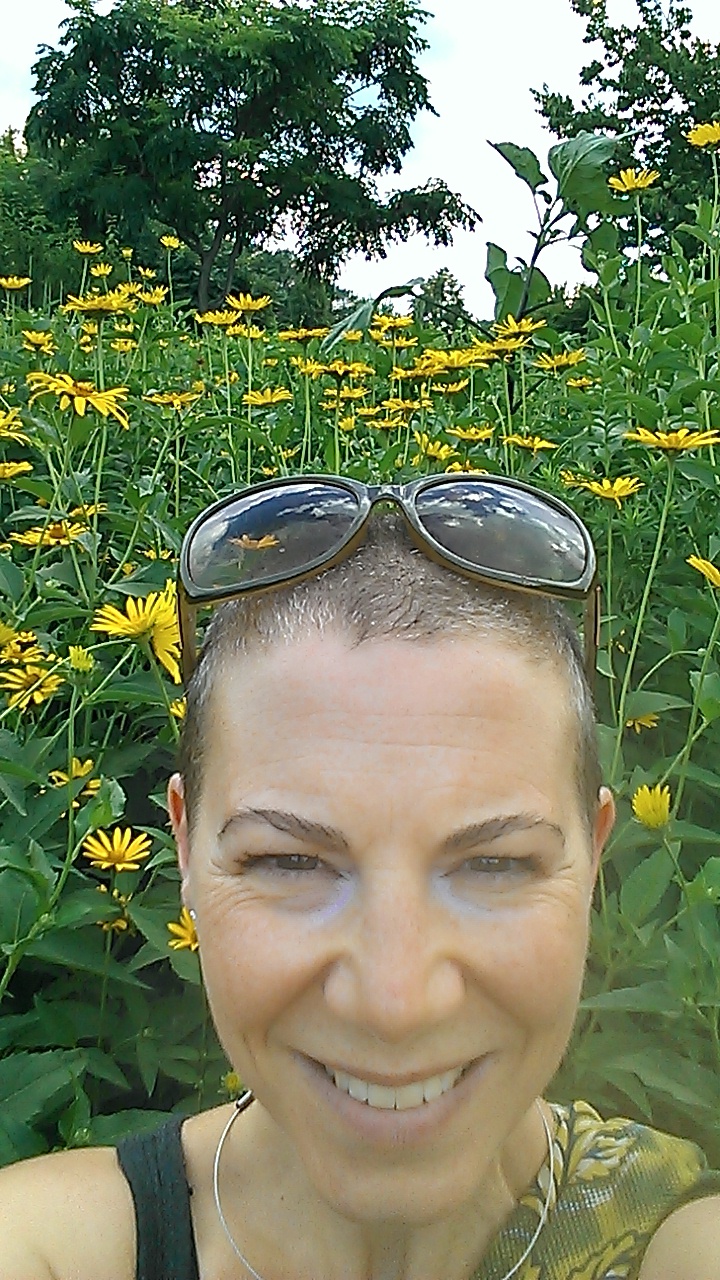 I like to think I am aware of my surroundings.
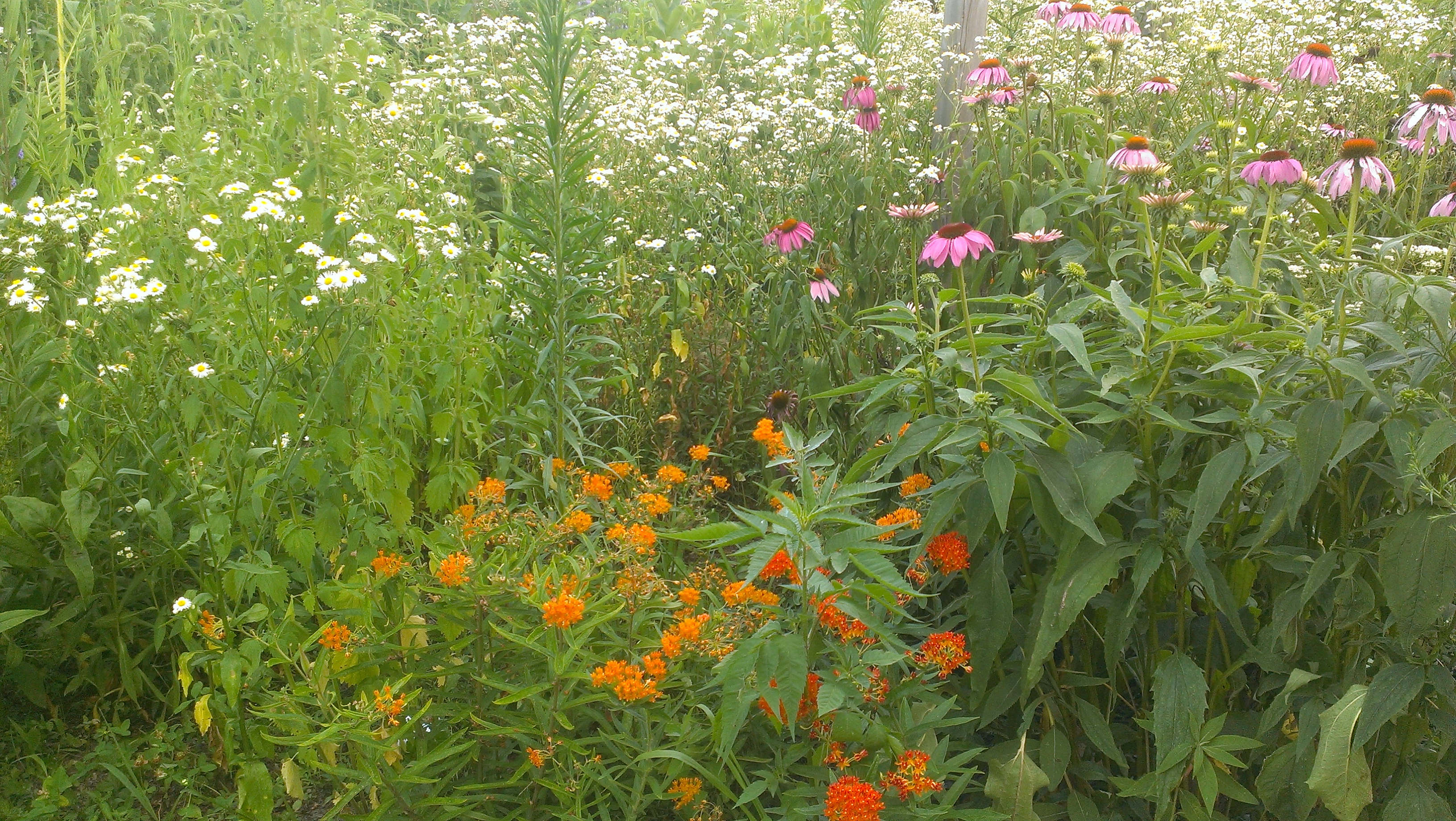 I feel a tinge of sadness leaving. I always want more.


 A Wandering Jewess